[생산관리 실무 노하우] 1편: 포장계획 양식의 치명적 문제점[Production Management Know-How] Chapter 1: The Fatal Flaws in Your Packaging Plan Form
강민보MINBO KANG·2026년 7월 14일July 14, 2026·7분 읽기7 min read
필자가 화장품 제조공장에서 생산관리 업무를 본격적으로 시작한 것은 2008년 즈음이다.
그 전 회사에서는 포장라인에서 공정에 따른 인원을 배치하거나 충전장치를 셋팅하거나 기기를 분해 세척하거나 하는 일을 했었다.
각설하고, 회사를 옮기면서 생산관리 업무를 맡게 되었는데 전임자에게서 전달받은 것 중의 하나가 생산계획을 작성하는 데 사용하는 엑셀 양식이었다.
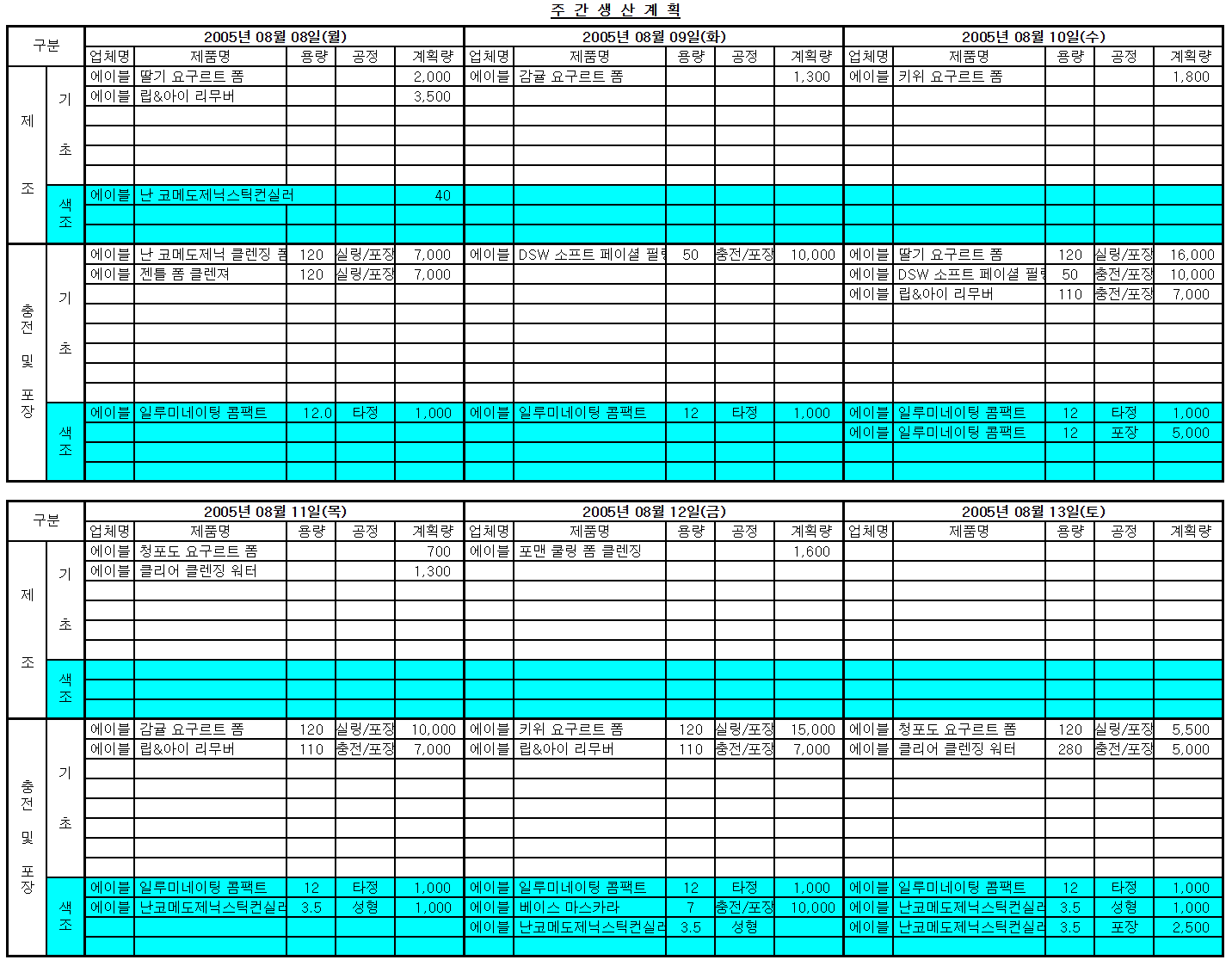
아래는 그 양식 중에서 포장계획의 예시이다.
필자는 위 양식을 며칠도 사용을 못했다. 왜?
눈치채셨는가?
그렇다.
위 양식에는 아주 치명적인 문제점들이 너무나도 많다.
두 가지만 짚고 넘어가자면, 첫 번째는 계획의 수정이 너무 어렵다. 아시겠지만 특히 OEM/ODM 업체의 경우는 생산계획은 수시로 변한다.
당일의 생산계획은 변하면 안 되겠지만 실제 필드에서는 사정이 다르다.
몇 가지 예시를 들자면, 고객이 급하게 요청한 출시일로 포장재가 점심시간에 입고된다고 해서 점심시간 이후로 계획에 반영해 놓았는데 입고된 포장재의 품질문제로 진행하지 못하는 경우.
작업 진행 중에 부자재나 벌크(반제품)의 품질 문제가 발견되는 경우.
튜브 실링기가 갑자기 고장나는 것과 같이 기계장치가 문제를 일으키는 경우.
오늘 포장 출근인원이 모자란 경우 등등 포장실 생산계획이 변동되는 경우는 PC가 고장나는 원인의 수만큼 다양하다.
위 양식에서 두 번째로 큰 문제는 발주처에서 납기만 다르고 동일한 품목을 연속 주문했을 경우 해당 주문을 구분하기 어렵다.
고객은 판매재고관리를 위해 월초나 월말로 해서 같은 발주서에서 동일품목을 다른 납기로 주문하거나 아예 발주서를 두 장 주는 경우도 많다.
공정에 필요한 인원 배분이나 공정순서, 어느 생산라인에서 진행하는지와 같은 기본이 되는 정보도 있어야 되지만 누락되어 있다.
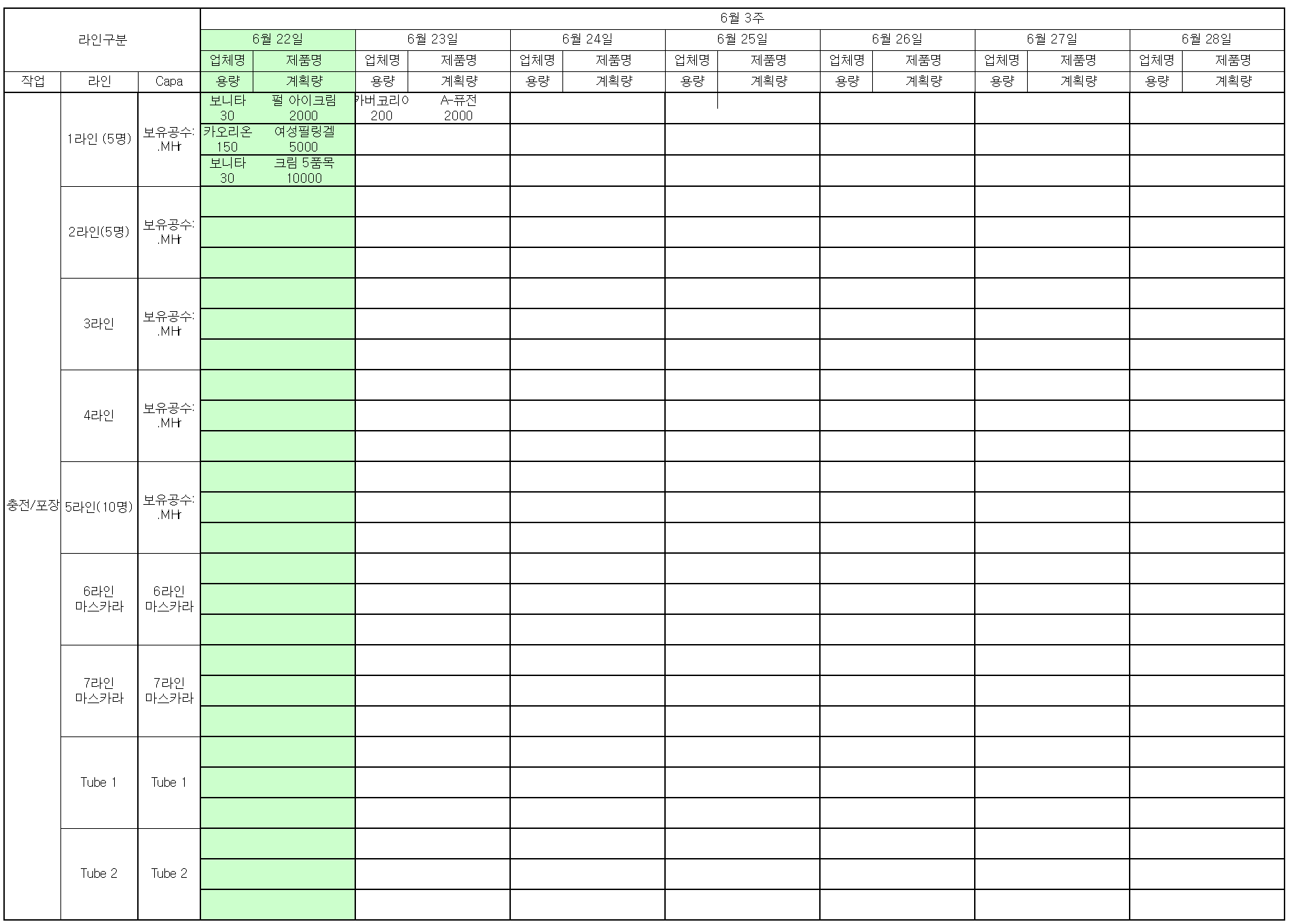
그나마 개선 버전이 아래이다.
라인번호도 있고 인원도 넣기 시작했지만 여전히 문제가 해결되지 않았다.
여기서 문제라고 하는 것을 몇 개 나열해 보면 아래와 같다.
여전히 한 가지 제품을 오늘에서 내일로 미루거나 당기는 수정이 어렵다.
포장을 진행해도 되는지 정보가 없다. (벌크, 부자재, 기기장치)
완제품·재공품에 대해 이미 있는 재고 정보가 없다.
어떤 발주서에 연결된 주문인지 알기 어렵다.
충전작업에 필요한 내용물을 만드는 제조계획을 별도로 세워야 한다.
내용물의 비중 정보가 없다.
포장작업지시서가 있다고 하더라도 참고할 만한 사항을 별도 기록해야 한다.
생산미팅을 할 때 충분한 자료를 제공하지 못한다.
화장품은 내용물을 먼저 만들고 그다음에 포장작업을 진행한다.
그런데 필자가 포장부터 소개하는 이유는 대부분의 주문은 완제품으로 의뢰가 들어오기 때문이다.
그러므로 생산계획은 포장부터 시작해야 한다.
다음 글에서는 위 문제를 해결한 양식을 살펴보기로 하자.
The author's full-scale production management career in a cosmetics manufacturing plant began around 2008.
Before that, at a previous company, the work involved assigning staff to packaging lines according to process requirements, setting up filling equipment, and disassembling and cleaning machinery.
To get to the point: after moving to a new company and taking on the production management role, one of the handover items from the outgoing manager was an Excel form used to create production schedules.
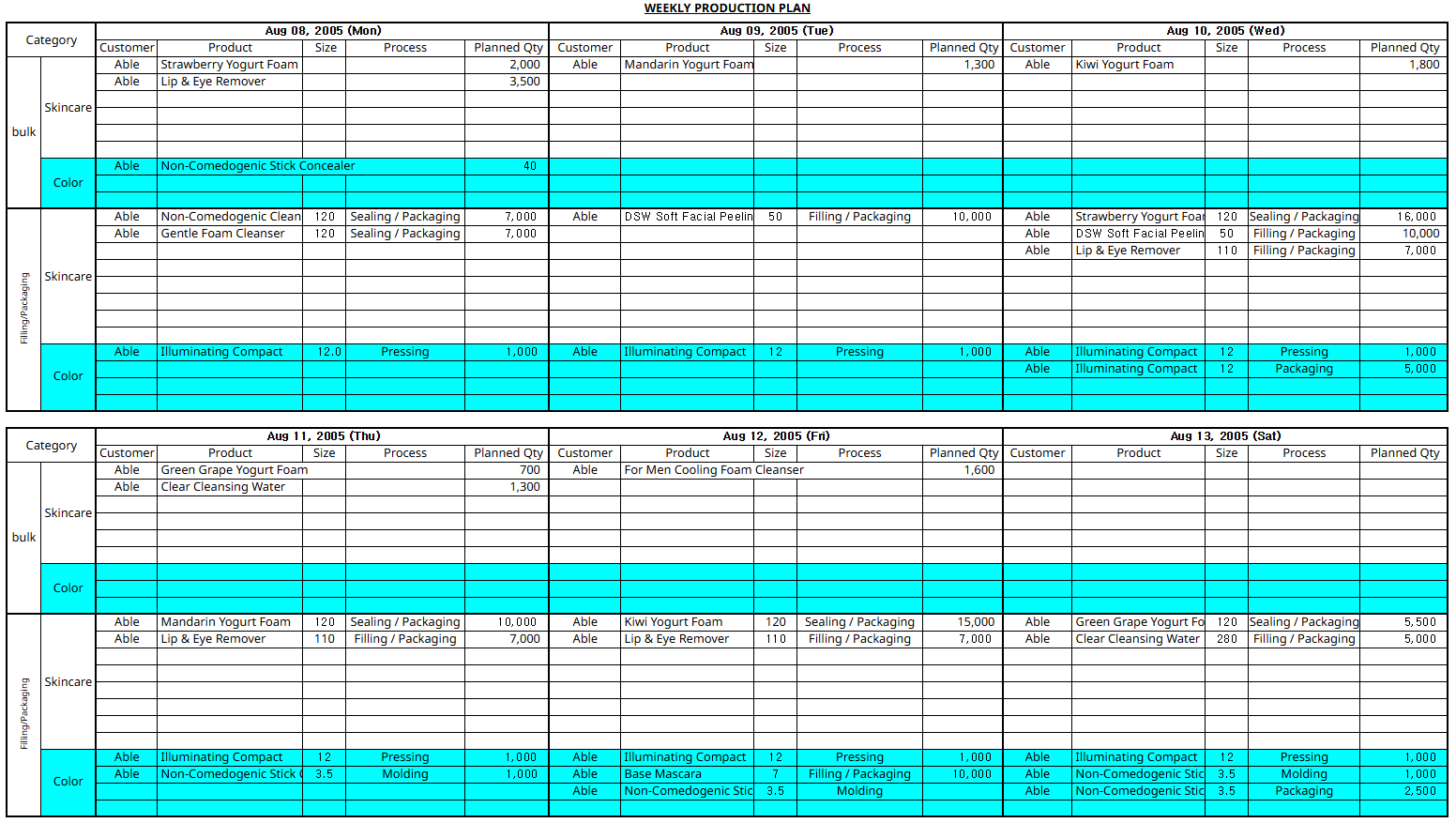
Below is an example of the packaging plan portion of that form.
I couldn't use this form for more than a few days. Why?
Have you spotted it?
Yes.
This form has far too many critical flaws.
Let me highlight just two. The first: revising the plan is far too difficult. As anyone in this field knows, production schedules — especially at OEM/ODM manufacturers — change constantly.
Ideally the day's plan shouldn't change, but reality on the factory floor is very different.
A few examples: packaging materials were expected to arrive during lunch for a customer's urgent launch date, so they were slotted into the afternoon schedule — only for the run to be put on hold because the incoming materials failed a quality check.
Quality problems discovered mid-run with subsidiary materials or bulk product (semi-finished goods).
Equipment failures — a tube sealing machine breaking down without warning, for instance.
Coming in short-staffed in packaging that day. The reasons a packaging room's production plan can shift are as numerous as the causes of a PC failure.
The second major problem: when a client places back-to-back orders for the same item with only different delivery dates, it becomes extremely difficult to distinguish those orders in this form.
For sales inventory management, customers frequently order the same item with different delivery dates on a single purchase order — or issue two separate purchase orders — around the start or end of each month.
Foundational information is also missing: how to allocate staff across processes, the sequence of operations, which production line handles which job.
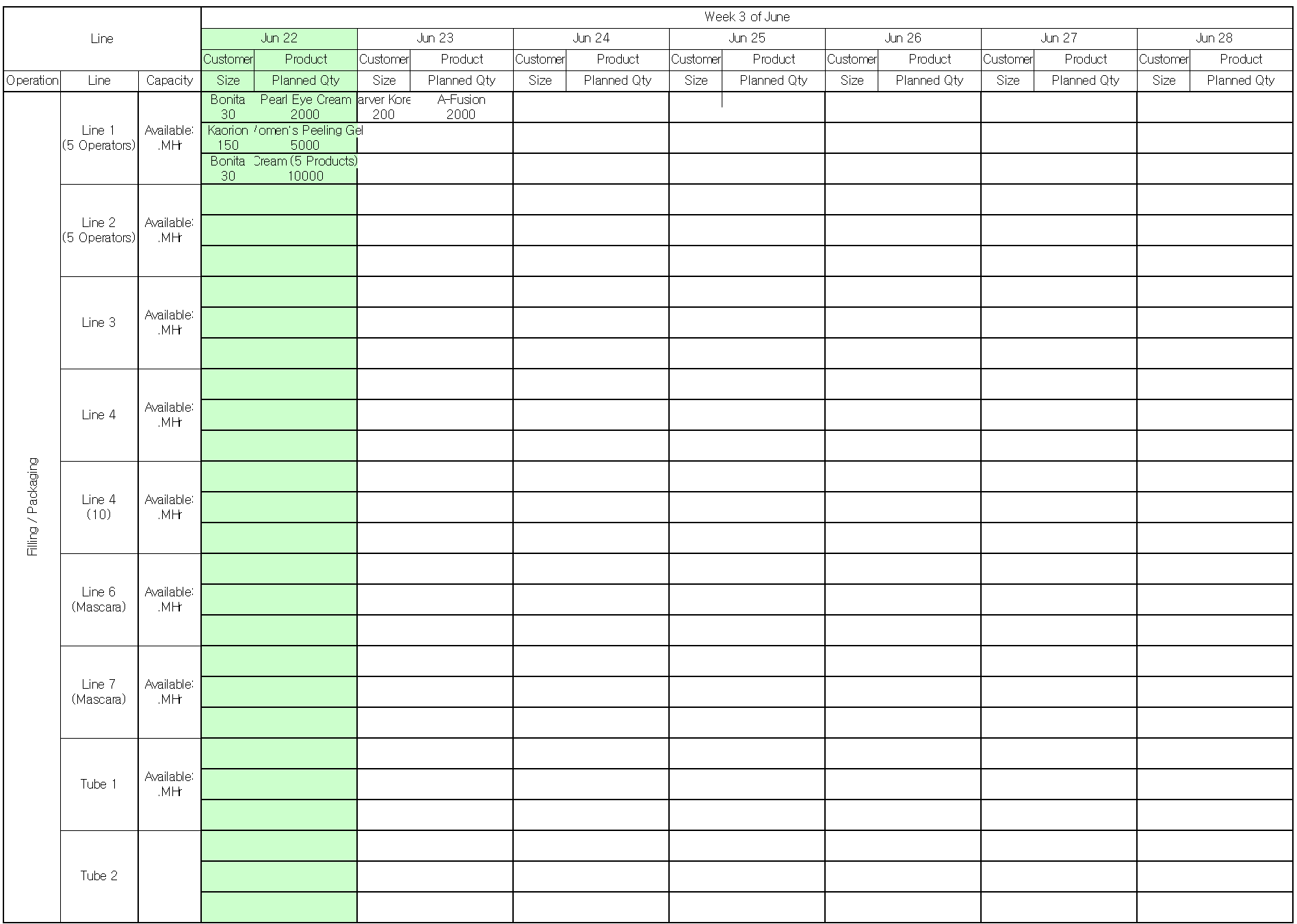
A modestly improved version looks like this.
Line numbers and headcount have been added, but the core problems remain unsolved.
Here is a list of the problems that persist:
Moving a single product from today to tomorrow — or pulling it forward — is still difficult.
No information on whether packaging can actually proceed. (Bulk product, subsidiary materials, equipment status)
No visibility into existing inventory of finished goods or work-in-progress.
Difficult to tell which purchase order a job is linked to.
The manufacturing plan for the bulk content — needed before filling — must be created separately.
No specific gravity data for the contents.
Even with a packaging work order, any reference notes must be recorded separately.
Insufficient data to run an effective production meeting.
In cosmetics manufacturing, the content (bulk) is produced first, then the packaging operation follows.
The reason I'm starting with packaging is that most orders come in as finished-product requests.
Therefore, production planning must begin with packaging.
In the next article, we'll look at the form that solved all of these problems.
댓글Comments