[컴퓨터 이야기] 컴퓨터에 대하여 1편 — 역사와 개요[Computer Stories] About Computers Part 1 — History & Overview
강민보MINBO KANG·2026년 7월 16일July 16, 2026·5분 읽기5 min read
이번 시간에는 컴퓨터가 무엇인지, 그리고 컴퓨터를 어떻게 이용하는지 함께 차근차근 짚어 보겠습니다.
처음부터 너무 어렵거나 복잡하게 들어가지는 않겠습니다. 컴퓨터를 처음 접하는 마음으로 아주 기초적인 내용부터 시작해 보겠습니다.
이해하기 쉽도록 비유를 사용하거나 복잡한 내용을 단순하게 설명하는 부분도 있습니다. 엄밀한 기술 설명과는 조금 다를 수 있다는 점을 미리 양해해 주시기 바랍니다.
컴퓨터란 무엇인가?
먼저 컴퓨터란 무엇일까요?
컴퓨터를 우리말로 옮기면 흔히 '전자계산기'라고 합니다. 하지만 컴퓨터는 단순히 숫자만 계산하는 기계가 아닙니다. 사용자가 입력한 명령과 데이터를 처리하고, 그 결과를 보여주는 전자 장치라고 이해하면 됩니다.
지금 이 글을 읽는 분들의 대부분은 스마트폰이 옆에 놓여 있을 겁니다.
우리가 가지고 있는 스마트폰 역시 컴퓨터입니다.
스마트폰은 전화만 하는 기계가 아닙니다. 사진을 찍고, 문서를 보고, 영상을 재생하고, 인터넷을 사용하며, 여러 가지 계산과 처리를 합니다. 모양은 다르지만 스마트폰도 분명한 컴퓨터입니다.
컴퓨터는 언제 등장했을까?
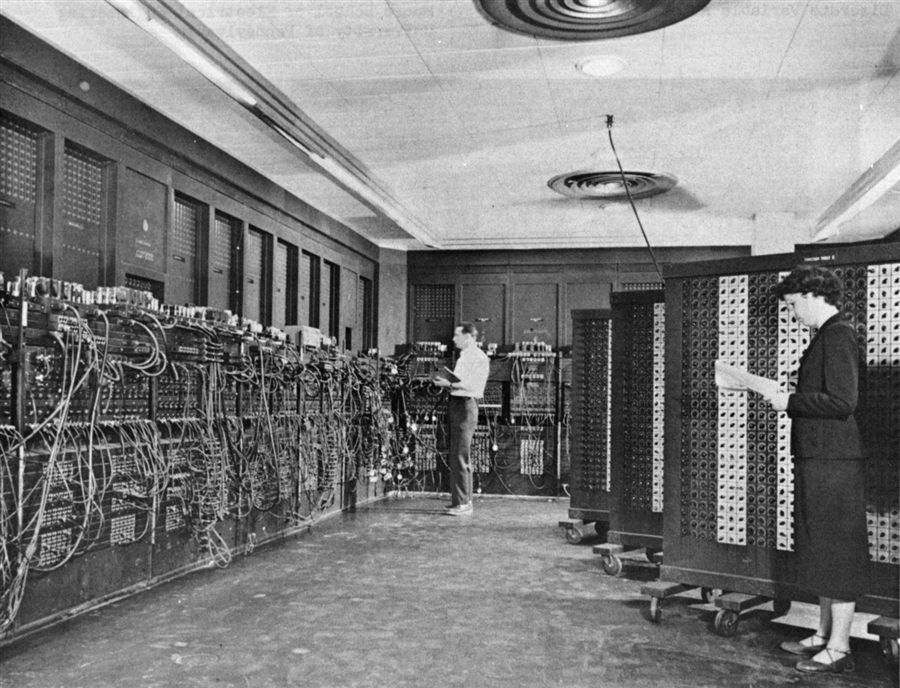
오늘날과 같은 전자식 컴퓨터의 초기 형태는 1940년대에 등장했습니다. 대표적으로 많이 알려진 컴퓨터가 미국에서 개발된 에니악, 즉 ENIAC입니다.
에니악은 1943년부터 제작되어 1946년에 완성됐습니다. 무게가 약 30톤이었고 약 1만 8천 개의 진공관을 사용했습니다. 장치를 일렬로 펼치면 길이가 약 30미터에 달할 정도로 매우 컸습니다.
지금 우리가 가지고 있는 스마트폰보다 계산 능력이 훨씬 떨어졌지만, 크기는 사무실 하나를 가득 채울 정도였습니다.
당시에는 지금처럼 작고 성능 좋은 반도체가 없었습니다. 그래서 현재의 반도체가 하는 역할을 진공관이라는 부품이 담당했습니다. 진공관이 무엇인지 잘 모르겠다면 예전에 사용하던 백열전구와 비슷하게 생긴 유리관을 떠올리면 됩니다.
컴퓨터는 이러한 장치를 이용하여 전기가 들어오는 상태와 들어오지 않는 상태를 구분했습니다. 이것을 숫자로 표현하면 1과 0입니다. 오늘날의 컴퓨터도 기본적으로는 수많은 1과 0을 이용하여 정보를 처리합니다.
컴퓨터의 '버그' 이야기
컴퓨터 역사에는 유명한 나방 이야기가 있습니다.
1947년 하버드 마크 Ⅱ라는 계산 장치가 제대로 작동하지 않아 기술자들이 원인을 조사했습니다. 그런데 장치 안의 릴레이 접점 사이에서 실제 나방 한 마리가 발견됐습니다. 기술자들은 그 나방을 작업 기록에 붙여 놓고 '실제로 벌레가 발견된 최초의 사례'라는 재미있는 기록을 남겼습니다.
이 사건 때문에 '버그'라는 단어가 처음 생긴 것은 아닙니다. 버그라는 말은 그 이전부터 기계의 결함이나 문제를 표현하는 말로 사용되고 있었습니다. 다만 이 사건을 계기로 컴퓨터의 오류를 버그라고 부르는 이야기가 널리 알려졌습니다.
지금도 프로그램에서 오류를 찾아 수정하는 일을 '버그를 잡는다'라고 표현합니다. 영어로는 디버깅, 즉 Debugging이라고 합니다.
앨런 튜링과 전쟁 중의 컴퓨터
혹시 영화 《이미테이션 게임》을 본 분이 계신가요? 이 영화는 영국의 수학자 앨런 튜링과 독일군 암호 해독에 관한 이야기를 다루고 있습니다.
제2차 세계대전 당시 독일군은 에니그마라는 암호 장치를 사용했습니다. 앨런 튜링과 동료들은 이 암호를 해독하기 위해 봄브라는 장치를 개발했습니다.
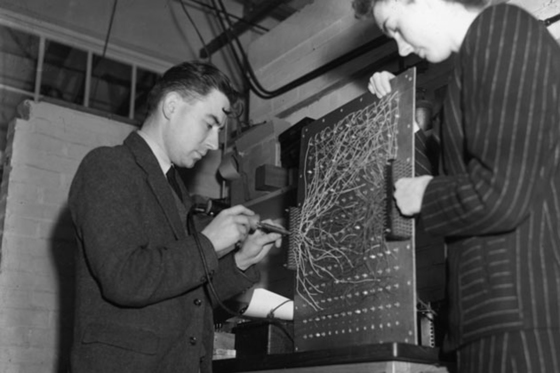
앨런 튜링의 주도로 1943년 독일군 암호 해독을 위해 만들어진 연산 컴퓨터 '콜로서스'. 미국의 '에니악'보다 2년 먼저 개발됐으나 영국이 1970년대까지 관련 사실을 기밀로 하는 바람에 '세계 최초 컴퓨터'란 영광은 에니악에 돌아갔다.
비슷한 시기에 영국에서는 콜로서스라는 전자식 계산 장치도 만들어졌습니다. 콜로서스는 토미 플라워스가 이끄는 기술자들이 개발했으며, 독일군의 로렌츠 암호를 해독하는 데 사용됐습니다. 콜로서스는 초기의 프로그래밍 가능한 전자식 컴퓨터 중 하나로 평가받습니다.
콜로서스와 관련된 정보는 전쟁이 끝난 뒤에도 오랫동안 영국 정부의 기밀로 관리됐습니다. 이 때문에 일반 사람들에게는 에니악이 최초의 컴퓨터로 더 널리 알려지게 됐습니다.
사실 '최초의 컴퓨터가 무엇인가'라는 질문에는 하나의 정답만 있는 것이 아닙니다. 전자식인지, 프로그램을 바꿀 수 있는지, 여러 목적으로 사용할 수 있는지에 따라 최초의 기준이 달라지기 때문입니다. 여기서는 컴퓨터가 1940년대부터 본격적으로 발전하기 시작했다고 이해하고 넘어가겠습니다.
2편에서는 컴퓨터가 어떻게 동작하는지, 그리고 하드웨어와 소프트웨어가 무엇인지 알아보겠습니다.
In this series we'll walk through what computers are and how they work — step by step, no prior knowledge needed.
We won't dive into complex territory right away. Think of it as coming to computers completely fresh, starting from the very basics.
We'll use analogies and simplified explanations along the way. Some details may be less precise than a technical manual — that's intentional, so please bear with us.
What is a computer?
Let's start with the obvious question: what exactly is a computer?
The word "computer" originally meant something that computes — that is, calculates numbers. But a modern computer is far more than a calculator. Think of it as an electronic device that takes commands and data from a user, processes them, and shows you the result.
Most of you probably have a smartphone nearby right now.
That smartphone is a computer.
It's not just a phone. It takes photos, opens documents, plays videos, browses the internet, and handles all kinds of calculations and tasks. It looks different from a desktop, but a smartphone is absolutely a computer.
When did computers appear?
The early form of the electronic computer we know today emerged in the 1940s. The most famous early example is ENIAC — the Electronic Numerical Integrator and Computer — developed in the United States.
ENIAC was built starting in 1943 and completed in 1946. It weighed around 30 tons and used roughly 18,000 vacuum tubes. Laid out in a line, it would stretch about 30 metres.
Its computing power was far below that of a modern smartphone, yet it took up an entire room.
Back then, there were no small, powerful semiconductors like the ones we have today. The role that semiconductors now play was handled by components called vacuum tubes — imagine a glass tube that looks something like an old light bulb.
Computers used these tubes to distinguish between two states: electricity flowing, or not flowing. Expressed as numbers, that's 1 and 0. Today's computers still fundamentally process all information using vast quantities of 1s and 0s.
The story behind "bug"
There's a famous moth story in computing history.
In 1947, a calculating machine called the Harvard Mark II kept malfunctioning. When engineers investigated, they found an actual moth trapped between the contacts of one of its relays. They taped the moth into the logbook with the note: "First actual case of bug being found."
The word "bug" wasn't invented by this incident — it had already been used to describe faults in machinery long before. But this event helped cement the idea of calling computer errors "bugs" in popular culture.
Finding and fixing bugs in software is still called "debugging" today.
Alan Turing and wartime computing
Have you seen the film The Imitation Game? It tells the story of British mathematician Alan Turing and the effort to crack German military codes during World War II.
The German military used a cipher machine called Enigma. Turing and his colleagues developed a machine called the Bombe to break those codes.
Colossus, built in 1943 under the leadership of Alan Turing to break German military ciphers. It predated ENIAC by two years, but the British government kept it classified until the 1970s — which is why ENIAC became famous as the world's first computer.
Around the same time, British engineers led by Tommy Flowers built another electronic computing device called Colossus, used to crack the German Lorenz cipher. Colossus is considered one of the first programmable electronic computers.
Information about Colossus remained classified for decades after the war, which is why ENIAC became far better known to the public as the "first computer."
The truth is, there's no single answer to "which computer was first." The answer depends on how you define it — electronic? programmable? general-purpose? Here, we'll simply note that computers began developing in earnest during the 1940s and move on.
In Part 2, we'll look at how computers work and explore the two fundamental building blocks: hardware and software.

댓글Comments