[생산관리] 색조화장품의 칼라 문제[Production Management] The Color Problem in Color Cosmetics
FREEWAYFREEWAY·2026년 7월 28일July 28, 2026·5분 읽기5 min read
색조화장품은 문제가 많다.
그 중에서도 칼라 문제는 생산관리 입장에서 가장 다루기 까다로운 축에 속한다.
칼라 구분이 모호하다
색조화장품에서 칼라 판정은 생각보다 훨씬 불명확하다.
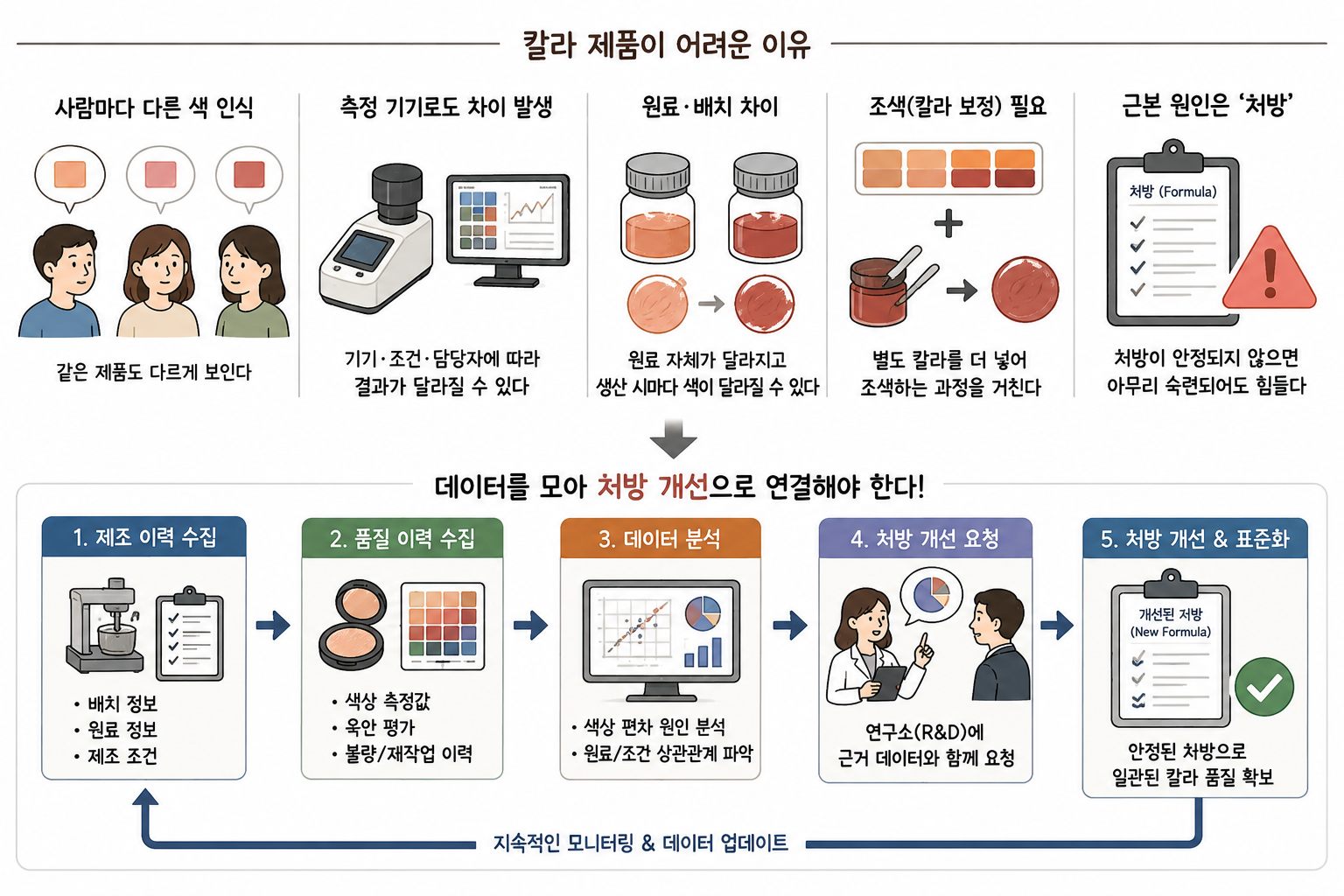
기계로 측정하는 경우도 있다. 분광측색계 같은 장비를 쓰면 수치가 나오니 객관적일 것 같지만, 실제로는 측정하는 사람에 따라, 또 고객사 담당자에 따라 기준이 달라진다. 수치가 같아도 "다르다"고 하고, 수치가 달라도 "괜찮다"고 하는 경우가 모두 있다.
근본적으로 사람의 눈이 인식하는 색은 그 사람의 필체만큼이나 다양하다. 같은 색을 보고도 누구는 붉다고 하고 누구는 오렌지에 가깝다고 한다. 조명 조건까지 더해지면 판정은 더 흔들린다.
표준품이 없으면 기준 자체가 없다
그래서 표준품(reference standard)이 존재한다. 승인된 칼라 기준이 되는 실물 샘플이다.
그런데 표준품조차 없는 경우가 있다. 이 경우에는 비교할 기준 자체가 없으니 판정은 완전히 사람의 주관에 맡겨진다. "지난번이랑 비슷하면 됩니다"라는 말이 기준이 되는 것이다.
표준품이 있더라도 그 자체가 시간이 지나면서 변색되거나, 여러 곳에 다른 버전이 돌아다니는 일도 생긴다. 표준품 관리도 쉽지 않다.
원료 편차가 칼라를 흔든다
원료는 배치(batch)마다 미묘하게 다르다. 특히 색조 원료는 제조사나 로트에 따라 색상 편차가 발생한다. 같은 처방으로 만들어도 이번 배치와 저번 배치의 색이 다르게 나오는 이유가 여기에 있다.
이런 경우 현장에서는 칼라를 맞추기 위해 별도의 색조 원료를 추가로 넣어 조색하는 과정을 거친다. 그러나 이 조색 자체가 처방에 없는 임시 조치다. 기록이 남지 않으면 다음 배치에서 같은 상황이 반복된다.
근본 원인은 처방에 있다
현장에서 아무리 노력해도 한계가 있다.
제조자의 숙련도가 높고, 조색 경험이 많아도 처방 자체가 불안정하면 재현성이 없다. 처방이 칼라 편차에 취약한 구조라면 생산할 때마다 같은 문제가 반복된다.
결국 해결책은 현장 대응이 아니라 처방 개선이다.
이력을 모아 연구소에 처방 개선을 요구한다
그러나 단순히 "칼라가 안 맞습니다"라는 말만으로는 연구소를 움직이기 어렵다.
필요한 것은 데이터다.
어떤 배치에서 칼라 이슈가 발생했는지 — 제조 이력
어떤 원료 로트를 사용했는지 — 원료 정보
그때 어떤 조색을 했는지, 얼마나 추가했는지 — 조색 기록
품질 판정 결과와 고객 피드백 — 품질 이력
이 이력들이 쌓이면 패턴이 보인다. 특정 원료 로트에서만 문제가 생기는지, 계절이나 온도 조건과 관련이 있는지, 아니면 처방의 구조적 문제인지를 판단할 수 있게 된다.
이 데이터를 근거로 연구소에 정식으로 처방 개선을 요구한다. 현장의 느낌이 아니라 기록된 사실로 요청하는 것이다. 그래야 연구소도 움직인다.
Color cosmetics are full of problems.
Among them, color issues are among the most difficult to manage from a production management perspective.
Color definition is ambiguous
Color judgment in color cosmetics is far less clear-cut than it looks.
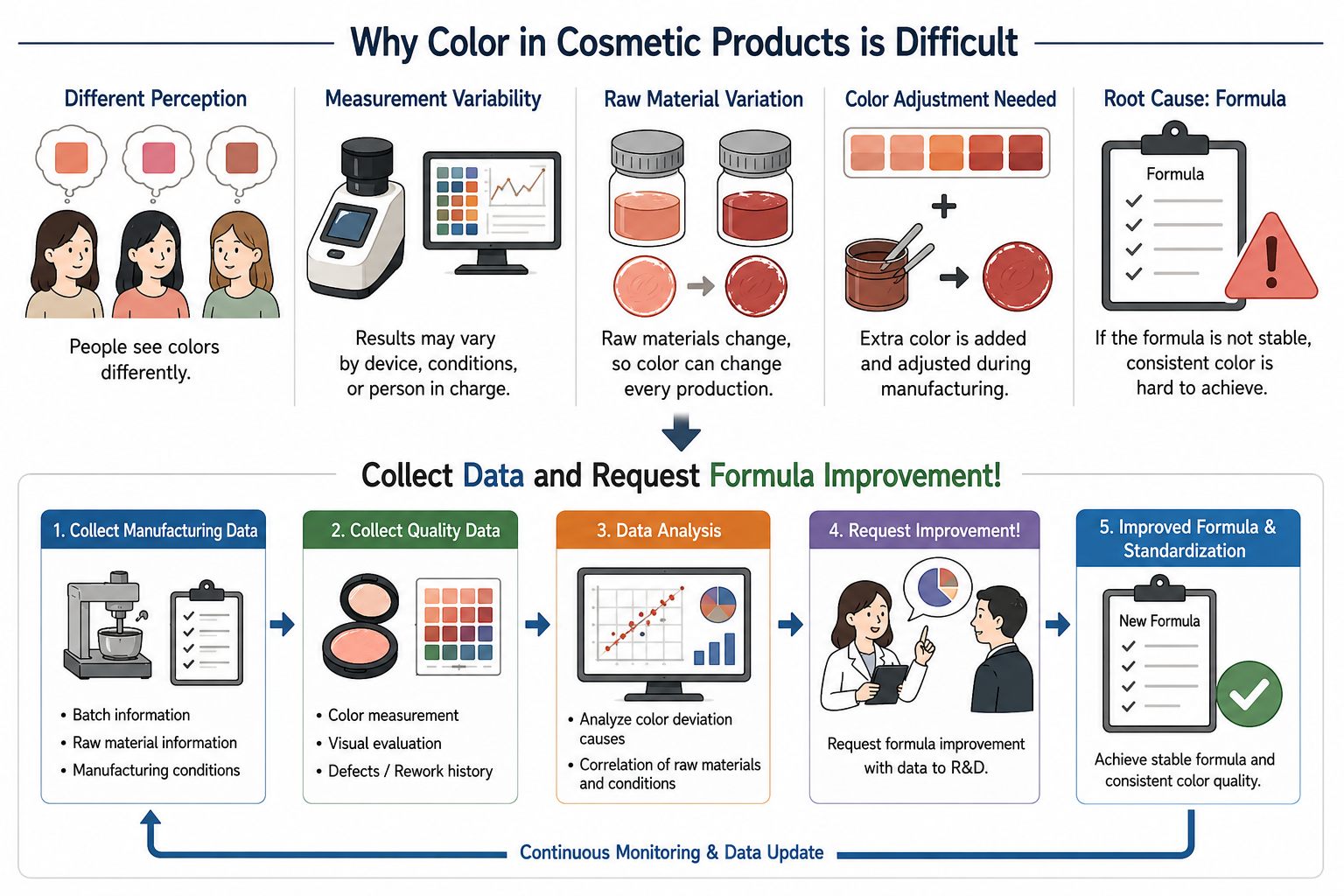
Instruments exist for this — spectrophotometers produce numerical readings that seem objective. In practice, the results vary depending on who is measuring and which customer representative sets the acceptance criteria. The same reading can be rejected by one person and approved by another.
At the most fundamental level, the color a person perceives is as individual as their handwriting. Two people looking at the same sample will disagree on whether it reads red or orange. Add varying lighting conditions and the judgment becomes even less stable.
Without a reference standard, there is no baseline
This is why reference standards exist — approved physical samples that define what the correct color looks like.
But sometimes there is no reference standard at all. Without one, color judgment falls entirely to individual perception. "Make it look like last time" becomes the working definition of acceptable.
Even when a reference standard exists, it can discolor over time, or multiple versions can end up circulating in different departments. Managing the standards themselves is its own challenge.
Raw material variation shifts the color
Raw materials vary subtly from batch to batch. Color pigments in particular can drift between manufacturers and production lots. This is why the same formula can produce slightly different shades from one manufacturing run to the next.
When this happens, the floor response is to add a small amount of a corrective pigment to bring the color back into range — a process called tinting or shading. But this is an ad-hoc fix, not part of the approved formula. Without proper documentation, the same situation repeats with the next batch.
The root cause is the formula
There is a limit to what the production floor can fix on its own.
No matter how skilled and experienced the manufacturing team is, if the formula itself is unstable, reproducibility is impossible. A formula that is structurally sensitive to raw material variation will produce the same color problems every time it is manufactured.
The real solution is not a better floor response — it is formula improvement.
Build a history, then formally request formula improvement from R&D
But simply saying "the color doesn't match" is not enough to move the R&D team.
What's needed is data.
Which batches had color issues — manufacturing history
Which raw material lots were used — material traceability
What tinting corrections were made, and how much was added — correction records
Quality judgment results and customer feedback — quality history
Once enough of this history accumulates, patterns emerge. It becomes possible to determine whether the problem is tied to a specific raw material lot, whether it correlates with seasonal or temperature conditions, or whether it is a structural weakness in the formula itself.
Armed with this data, production management can make a formal request to R&D for formula improvement — grounded in documented fact, not floor intuition. That is what makes R&D take the request seriously.
댓글Comments