[지나가는 글] 설명서 방향 하나가 라인을 멈춘다[In passing] A Leaflet in the Wrong Direction Stopped the Line
FREEWAYFREEWAY·2026년 8월 7일August 7, 2026·5분 읽기5 min read
작업자는 스스로 판단한다
라인 작업자는 대부분 작업 방법을 스스로 판단하고 실행한다. 명확한 작업표준이 없거나, 있어도 현장에 충분히 전달되지 않은 경우가 많다. 여기에 숙련 인력 부족 문제가 겹친다. 제조 현장에서 인력 수급 어려움은 이제 일상이 되었고, 결과적으로 작업 방법을 제대로 배우지 못한 채 라인에 투입되는 경우가 비일비재하다.
그러면 어떤 일이 생기는가? 작업자는 가장 편하다고 느끼는 방식을 선택한다. 그것이 공정 전체에 어떤 영향을 미치는지는 고려하지 않거나, 애초에 알지 못한다. 문제는 그 판단이 틀렸을 때 금방 드러나지 않는다는 것이다. 한 공정에서 발생한 문제가 두 세 공정 뒤에서야 불량이나 적체로 나타나기 때문이다.
현장 일화 — 설명서 방향이 라인을 멈췄다
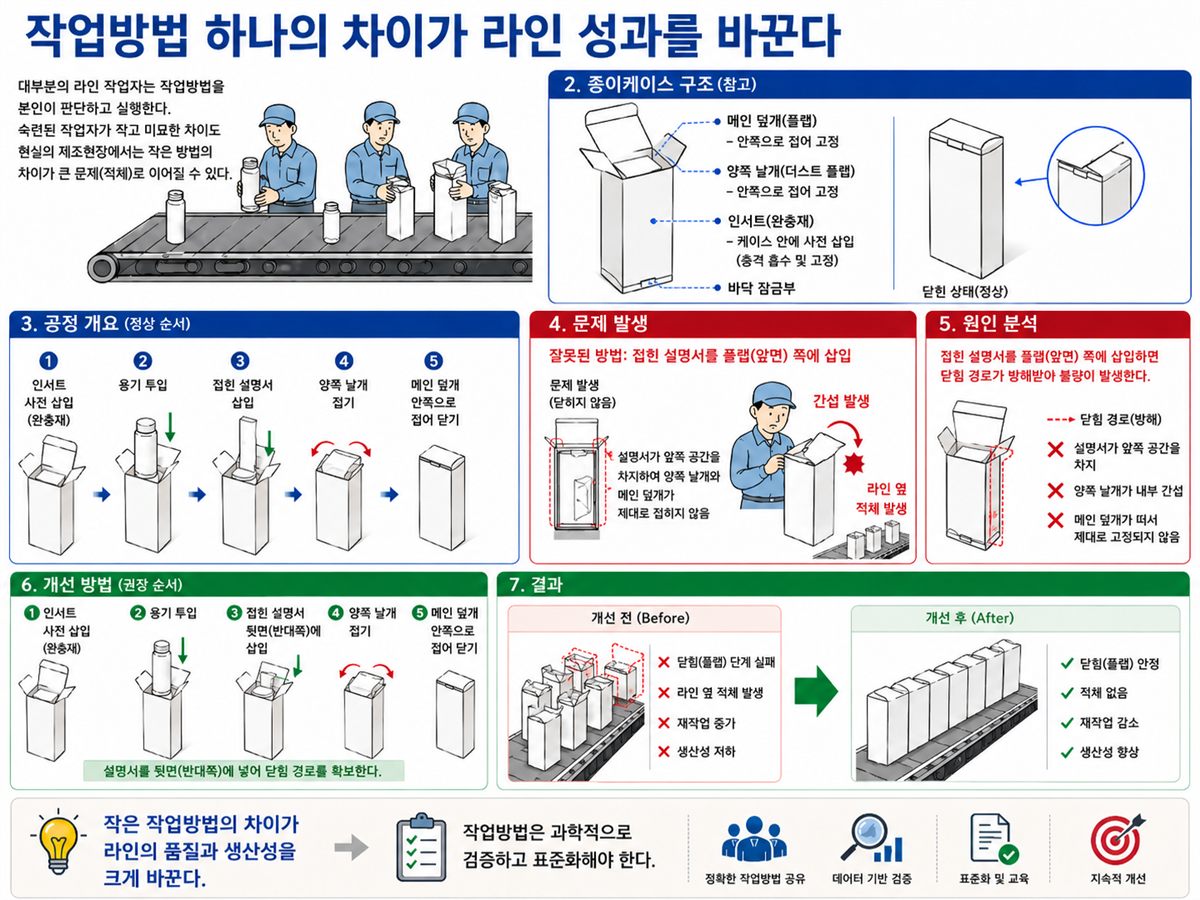
원통형의 충전된 용기를, 인서트가 들어간 직사각형 종이 케이스(단상자)에 포장하는 공정이 있었다. 공정 순서는 단순했다.
종이 케이스에 용기를 넣는다
설명서를 넣는다
케이스 덮개를 접어서 닫는다
용기를 넣고 나면 케이스 내부 공간이 넉넉하지 않다. 설명서를 넣는 작업자는 들어가는 쪽이 어느 쪽이든 크게 신경 쓰지 않았다. 손에 잡히는 대로, 편한 쪽인 케이스 앞쪽에 설명서를 밀어 넣었다.
그런데 설명서를 넣는 작업자와 덮개를 접어 닫는 작업자는 서로 다른 사람이었다. 덮개를 닫는 작업자가 보니 덮개가 케이스 안으로 잘 들어가지 않았다. 억지로 넣으려 하면 구겨지거나 접지가 실패했다. 결과적으로 라인 옆에 미처 처리하지 못한 제품들이 계속 쌓이기 시작했다.
원인은 단순했다
종이 케이스의 구조를 생각해 보면 금방 알 수 있다. 덮개 부분은 케이스 안쪽으로 접혀 들어가는 방식이다. 그런데 바로 그 자리에 설명서가 먼저 들어가 있으면 덮개가 파고들 공간이 없다. 설명서와 덮개가 정면으로 간섭한 것이다.
해결책도 단순했다. 설명서를 덮개가 들어가지 않는 반대쪽(뒤쪽)에 넣도록 수정했다. 그 즉시 접지 실패가 사라졌고, 라인 옆에 쌓이던 제품도 더 이상 생기지 않았다.
콜럼버스의 달걀
듣고 나면 당연한 이야기다. 설명서가 덮개 쪽을 막으면 안 된다는 것은, 케이스 구조를 한 번만 봐도 알 수 있다. 그래서 "왜 그걸 몰랐냐"는 말이 나올 수 있다.
그러나 이런 일은 현장에서 비일비재하다. 작업자는 자신이 담당하는 공정만 보고 있고, 다음 공정에서 무슨 일이 일어나는지를 직접 확인하기 어렵다. 본인이 편한 방식이 틀렸다는 피드백이 즉시 오지 않으면 문제인지 모른다. 관리자도 마찬가지다. 라인 전체를 동시에 보지 않으면, 적체가 어디서 시작됐는지 처음엔 잘 모른다.
이것이 지속적 관찰과 개선(Continuous Observation & Improvement)이 필요한 이유다. 작업표준을 만드는 것도 중요하지만, 현장을 직접 걸어 다니며 작업자가 실제로 어떤 방식을 쓰는지 눈으로 확인하는 것이 먼저다. 문제는 항상 '당연한 것'을 당연히 하지 않는 데서 시작한다.
Workers Decide Their Own Methods
On most production lines, workers figure out their own work methods as they go. Clear work standards are often missing — or exist on paper but never reached the floor. Layer on top of that the chronic skilled-labor shortage. Getting people trained properly before they start is a luxury fewer and fewer manufacturers can afford. The result: workers learn by doing, and "doing" means choosing whatever feels easiest.
What happens then? Each worker settles on the approach that feels most comfortable, with little or no awareness of how that choice ripples downstream. The problem is that mistakes don't show up immediately. A small misstep at one station often surfaces two or three stations later — as a defect, a jam, or a growing pile of unfinished product.
The Case — One Leaflet Direction Stopped the Line
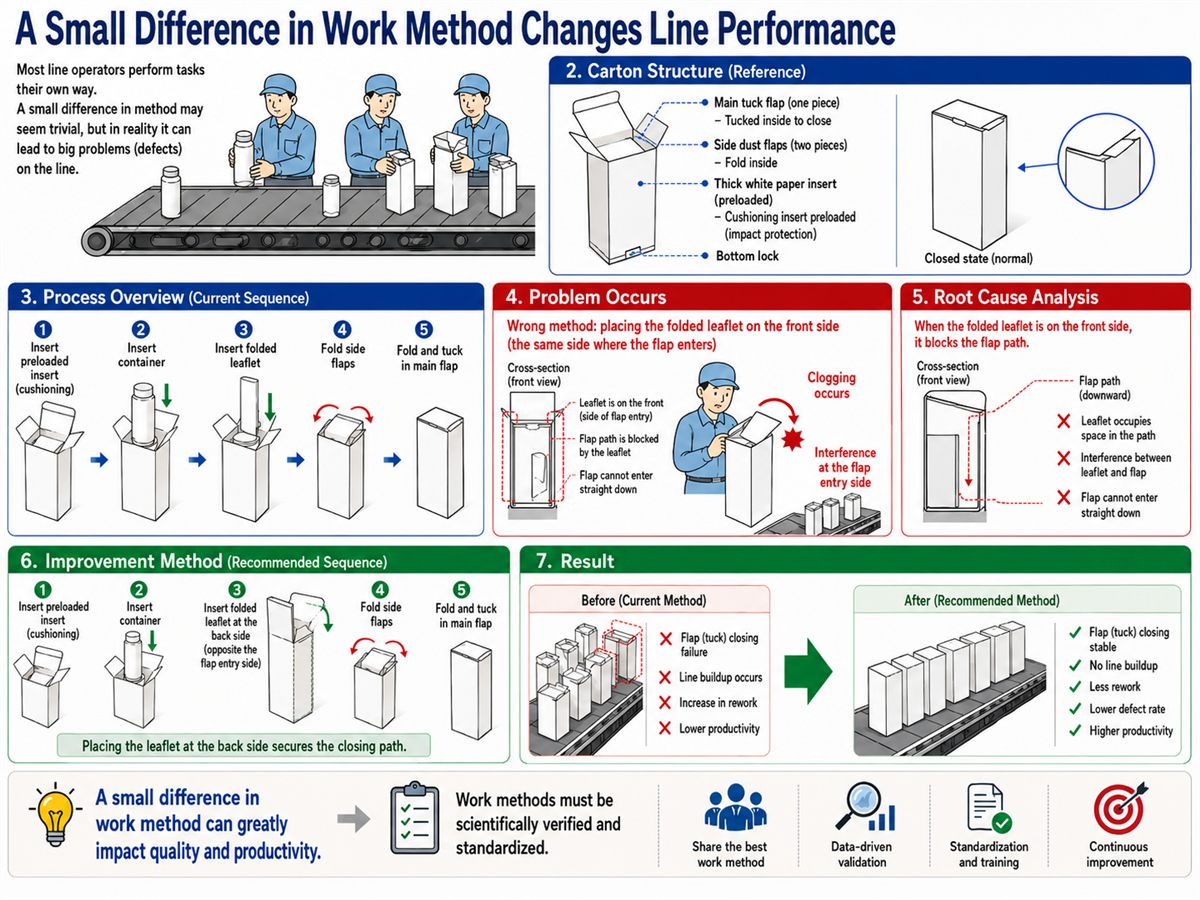
There was a packaging line for a cylindrical container. The operation: take a filled cylindrical container, place it in a rectangular paper box with a cardboard insert, add a product leaflet, then fold and close the lid. Simple enough.
Place the container in the paper box.
Insert the leaflet.
Fold and close the lid.
After the container goes in, the remaining space inside the box is tight. The worker inserting the leaflet didn't think much about which end it went into. She pushed it in from whichever side was easiest — the front of the box.
The person inserting the leaflet and the person folding the lid were different workers. The lid-closer found that the flap wouldn't go in smoothly. Forcing it caused crumpling and fold failures. Products started piling up beside the line — more and more, faster than they could be reworked.
The Cause Was Simple
Look at how the box is built. The lid closes by having its flap tuck inside the box. If the leaflet is already occupying that space, there's nowhere for the flap to go. The leaflet and the lid flap were head-on with each other.
The fix was equally simple: insert the leaflet from the opposite end — away from where the lid tucks in. The fold failures stopped immediately. No more products piling up beside the line.
Columbus's Egg
After hearing this, it sounds obvious. Anyone who has seen the box once would understand that blocking the tuck space creates a problem. "How did nobody notice?" is a fair question.
But this kind of thing happens constantly on real production floors. Workers see only their own station. They get no direct feedback about what's happening three steps downstream. If the method feels fine at their end, there's no signal that anything is wrong. Supervisors face the same blind spot — unless you're walking the whole line at once, it's not always obvious where a buildup started.
This is exactly why continuous observation and improvement matters. Writing work standards is important, but the first step is walking the floor and watching with your own eyes what workers are actually doing — not what the instruction sheet says they should do. Problems almost always start where something "obvious" gets quietly skipped.
댓글Comments