[생산관리] 창고 로케이션 관리의 기본 원칙[Production Management] The Basics of Warehouse Location Management
FREEWAYFREEWAY·2026년 7월 29일July 29, 2026·6분 읽기6 min read
창고가 엉망이면 생산도 엉망이 된다.
무엇이 어디에 있는지 모르면 찾는 데 시간을 쓰고, 잘못된 자리에 넣으면 출고 실수가 생기고, 기준이 없으면 사람마다 제각각으로 쌓는다. 로케이션 관리는 창고를 사람이 아닌 시스템으로 운영하는 첫걸음이다.
로케이션 관리의 6가지 원칙
초보자도 알기 쉽고 작업하기 쉽게 — 숙련자만 아는 창고는 위험하다. 누가 들어와도 찾을 수 있어야 한다.
정위치 지정 관리 — 물품마다 자리가 정해져 있어야 한다. 빈 자리에 아무 것이나 채워 넣는 순간 관리가 무너진다.
눈으로 보이는 보존 관리 — 재고 상태, 유효기간, 수량 이상이 현장에서 바로 눈에 띄어야 한다.
이상 기준값 표시 관리 — 최대·최소 재고량, 적재 한계 같은 기준을 현장에 명시한다.
바코드 수단 활용 — 로케이션 번호와 제품 코드에 바코드를 붙이면 입출고 오류가 크게 줄어든다.
코드화·정보화 — 로케이션 정보는 시스템에 연결될 수 있어야 한다. 종이에만 있는 정보는 관리할 수 없다.
보관방식 3가지
로케이션에 물품을 배치하는 방식은 크게 세 가지로 나뉜다.
고정 로케이션
보관 자리가 제품별로 고정되어 있다. 항상 같은 자리에 같은 제품이 있다.
회전율이 높은 A품목에 적합
다수량 보관에 유리
누구나 위치를 외울 수 있어 작업 속도가 빠르다
자유 로케이션
빈 자리 어디에나 보관할 수 있다. 입고 시점에 자리를 배정한다.
회전율이 낮은 B·C품목에 적합
보관 효율과 유연성이 높다
시스템 없이 운영하면 어디 있는지 알 수 없게 된다
고정·자유 병행 로케이션
특정 품목군에는 구역을 고정하되, 그 구역 안에서는 자유롭게 채운다. 가장 보편적으로 사용하는 방식이다.
A·B·C 모든 품목에 적용 가능
고정과 자유의 장점을 절충한 방법
로케이션 번호 체계
로케이션 번호는 제품이 보관된 위치를 코드로 표현한 것이다. 번호를 보면 창고 어디에 있는지 바로 알 수 있어야 한다.
구성은 큰 영역에서 작은 영역 순서로 계층화한다.
창고 구분코드 — 창고가 2곳 이상일 때 구분. 한 곳이면 생략 가능.
보관구역 구분코드 — 화주사별·브랜드별·상품군별 대분류. 단일 구역이면 생략 가능.
작업라인(통로) 구분코드 — 보관 랙이 늘어선 통로 단위로 구분.
랙 번호 — 통로 안에서 랙 순번.
셀 구분코드 — 랙의 단(층)과 열을 조합한 최종 위치.
로케이션 번호 예시
13-A5-03-45
1
창고(물류 센터) 번호
3
브랜드(작업 구역) 번호
A5
통로 번호 (A5 라인)
03
랙 번호 (03번 랙)
45
셀 번호 (4단 5열)
물리적 위치 지정 — 셀이 아니어도 된다
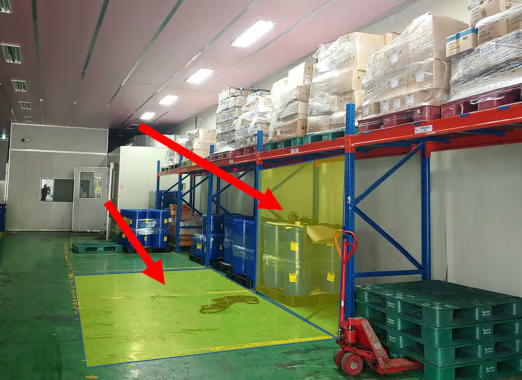
로케이션은 반드시 랙의 셀일 필요는 없다. 바닥 팔레트 구역, 임시 대기 공간, 검사 대기 구역, 불량 격리 구역처럼 창고 안의 모든 장소에 위치번호를 부여할 수 있다.
임시 장소라도 번호가 붙어 있으면 "저기 임시로 쌓아 둔 것"이 시스템에서 추적 가능한 재고가 된다. 번호 없는 임시 장소는 결국 잊혀진다.
위치번호는 해석이 쉬워야 한다. 번호를 보고 창고 지도 없이도 어디로 가야 하는지 유추할 수 있어야 좋은 체계다.
When a warehouse is in disarray, production follows.
Not knowing where things are wastes time searching. Putting items in the wrong place leads to picking errors. Without clear rules, every person develops their own system. Location management is the first step toward running a warehouse as a system rather than by individual memory.
Six principles of location management
Easy enough for a newcomer — A warehouse that only experienced staff can navigate is a liability. Anyone who walks in should be able to find what they need.
Designated-position management — Every item has an assigned location. The moment empty space is filled at random, the system breaks down.
Visible inventory condition — Stock status, expiry dates, and quantity anomalies must be visible on the floor without having to look them up.
Threshold markings — Maximum and minimum stock levels and stacking limits should be posted at the location itself.
Barcode integration — Attaching barcodes to location numbers and product codes significantly reduces receiving and picking errors.
Codification and digitization — Location data must be connectable to a system. Information that only exists on paper cannot be managed reliably.
Three storage methods
There are three main approaches to assigning products to locations.
Fixed location
Each product has a permanently assigned location — always the same spot.
Best suited to high-turnover A-items
Efficient for large quantities of a single SKU
Staff can memorize locations, which speeds up picking
Free location (floating)
Any empty slot can be used. The location is assigned at the time of receipt.
Best suited to low-turnover B and C items
Higher storage efficiency and flexibility
Without a system to track assignments, inventory becomes unfindable
Combined (fixed + free)
A dedicated zone is assigned to a product group, but within that zone items are placed freely. The most commonly used method in practice.
Applicable to A, B, and C items simultaneously
A practical compromise between the two extremes
Location numbering system
A location number is a code that expresses where in the warehouse something is stored. Reading the number should tell you where to go — without needing a map.
The structure moves from large area to small, in layers:
Warehouse code — Used when operating two or more warehouses. Omit if there is only one.
Zone code — Divides the warehouse by customer, brand, or product category. Omit if there is only one zone.
Aisle code — Identifies the picking aisle between rows of racks.
Rack number — The rack within the aisle.
Cell code — The final location: a combination of tier (row) and column within the rack.
Location number example
13-A5-03-45
1
Warehouse number
3
Brand / zone number
A5
Aisle A5
03
Rack 03
45
Cell: tier 4, column 5
Physical location — it doesn't have to be a rack cell
A location does not have to be a rack cell. Floor pallet zones, temporary staging areas, inspection hold areas, and quarantine zones can all be assigned location numbers.
Even a temporary area becomes traceable inventory the moment it has a number. Without a number, items placed in a temporary spot tend to be forgotten — because the system has no record of them being there.
Location numbers should be self-explanatory. A good numbering system lets someone figure out roughly where to go just by reading the number, without consulting a floor map.
댓글Comments