[컴퓨터 이야기] 코딩환경 변천사 — 두꺼운 책에서 AI까지[Computer] The Evolution of Coding Environments — From Heavy Books to AI
FREEWAYFREEWAY·2026년 8월 20일August 20, 2026·4분 읽기4 min read
인터넷이 없던 시절, 책이 전부였다
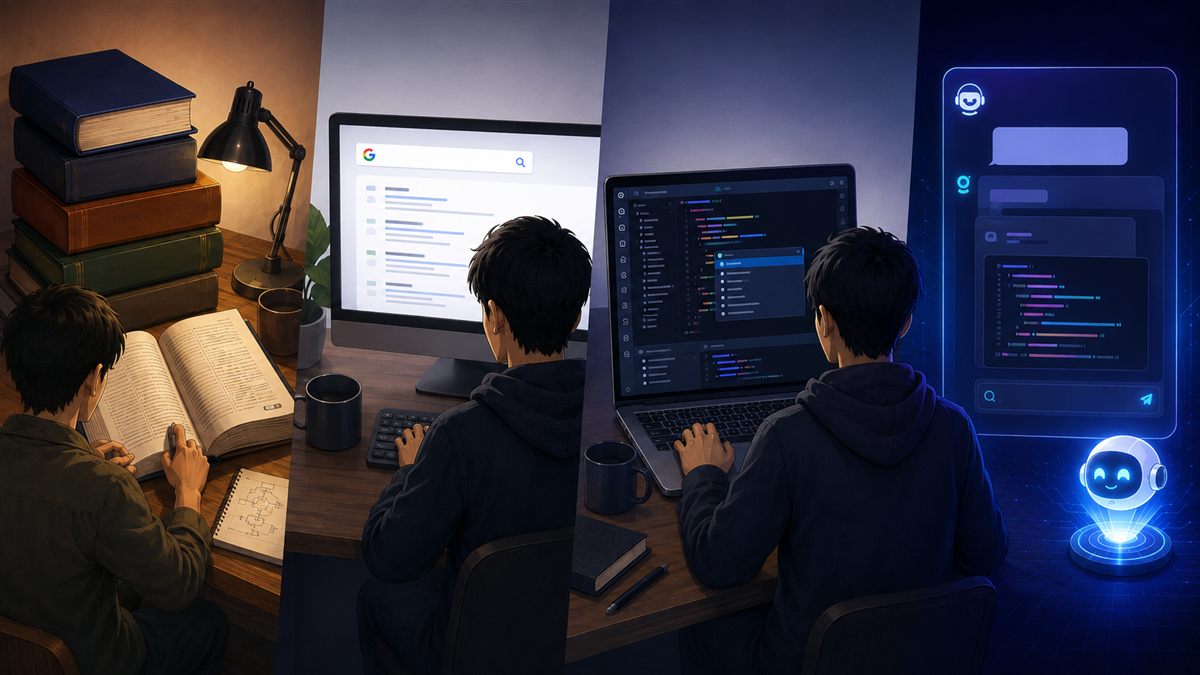
인터넷이 나오기 이전에는 책을 보면서 코딩했습니다. 그것도 얇은 책이 아니라, 손목이 아플 정도로 두꺼운 책을 옆에 끼고 원하는 챕터를 찾아가며 구현했습니다. 막히는 부분이 생기면 목차와 색인을 뒤적여 해당 페이지를 찾아가는 것이 지금의 "검색"이었던 셈입니다.
지금 돌이켜보면 비효율적으로 느껴지지만, 당시에는 그 두꺼운 책 한 권이 개발자에게 유일한 레퍼런스였습니다. 책 한 권을 통째로 씹어 먹듯 반복해서 뒤적이다 보면, 오히려 언어나 프레임워크의 전체 구조를 자연스럽게 몸에 익히게 되는 효과도 있었습니다.
인터넷 시대: 구글과 스택오버플로우
인터넷이 활발해진 이후로는 코딩의 방식 자체가 바뀌었습니다. 모르는 게 있으면 책을 펼치는 대신 구글에 검색어를 입력했습니다. 즉, 구글의 도움을 받아 검색하며 코딩하는 방식으로 넘어간 것입니다.
이 시기 가장 큰 존재감을 보인 곳은 단연 스택오버플로우(Stack Overflow)였습니다. 에러 메시지를 그대로 복사해서 검색창에 붙여넣으면 십중팔구 스택오버플로우 질문·답변이 상위에 걸렸고, "이 사람도 나와 똑같은 문제로 고생했구나" 하는 동질감마저 느끼게 해주는 곳이었습니다.
국내에서는 조금 다른 흐름이 있었습니다. 초창기에는 PHPSCHOOL이 유독 유명했고, 이후 데브피아 같은 커뮤니티가 그 뒤를 이었습니다. 언어별·주제별 게시판을 뒤지며 비슷한 사례를 찾아 헤매던 것도 이 시기의 익숙한 풍경이었습니다.
자동완성, 템플릿, 코드 스니펫의 시대
검색 중심의 코딩과 함께, IDE와 에디터의 발전도 이어졌습니다. 코드 자동완성, 프로젝트 템플릿, 코드 스니펫 같은 도구들이 속속 등장하면서 반복적인 타이핑과 보일러플레이트 코드 작성 부담을 줄여주었습니다. 자주 쓰는 패턴을 스니펫으로 저장해두고 단축키 몇 번으로 불러오는 방식은 당시로서는 꽤 획기적인 생산성 향상이었습니다.
그리고 지금, AI 시대
하지만 AI가 자리 잡은 지금, 앞서 언급한 것들은 상대적으로 존재감이 옅어졌습니다. 자동완성이나 스니펫은 이제 AI가 문맥을 이해하고 코드 전체를 제안해주는 수준으로 흡수되었고, 검색 방식도 크게 달라졌습니다. 키워드를 조합해 검색엔진에 던지고 여러 페이지를 열어 비교하던 방식은 점점 한물간 방식이 되어가고 있습니다. 요즘은 검색에서도 AI 모드를 쓰는 경우가 많아졌으니, 키워드 검색 자체의 비중이 눈에 띄게 줄어든 셈입니다.
격세지감
두꺼운 책을 뒤적이던 시절부터, 구글과 스택오버플로우로 검색하던 시절, 그리고 지금 AI에게 바로 물어보는 시절까지. 코딩 환경이 바뀌어온 속도를 돌아보면 격세지감을 느끼지 않을 수 없습니다.
돌이켜보면 각 시대마다 나름의 배움의 방식이 있었습니다. 두꺼운 책은 전체 구조를 훑게 해주었고, 검색은 실전에서 부딪힌 문제를 빠르게 해결하게 해주었습니다. 지금의 AI는 이 둘을 합친 데다 대화형으로 맥락까지 파악해준다는 점에서, 지금까지와는 또 다른 층위의 변화라는 생각이 듭니다. 다음 세대의 개발자들은 지금 이 시기를 어떻게 회고하게 될지 궁금해지는 요즘입니다.
Before the Internet, Books Were Everything
Before the internet, you coded from books. Not thin ones — thick, wrist-straining volumes that sat beside you while you hunted through chapters for what you needed. When you got stuck, flipping through the table of contents and the index to find the right page was the equivalent of today's "search."
Looking back it seems inefficient, but at the time a single thick book was a developer's only real reference. Poring over it again and again — almost memorizing it through repetition — had a side effect: you naturally absorbed the full structure of a language or framework in a way that's hard to replicate any other way.
The Internet Era: Google and Stack Overflow
Once the internet took hold, the way people coded changed at its root. When something was unclear, you typed into Google instead of opening a book — searching with Google's help became the new mode of coding.
The platform that defined this era was, without question, Stack Overflow. Paste an error message into the search bar and nine times out of ten a Stack Overflow thread came up at the top. There was even a sense of camaraderie in it — "someone else fought through exactly this problem."
In Korea, there was a slightly different current. Early on, PHPSCHOOL had an outsized reputation, with DevPia carrying the torch afterward. Digging through language- and topic-specific forums looking for a parallel case was a familiar scene from that period.
The Age of Autocomplete, Templates, and Code Snippets
Alongside search-driven coding came the rapid advance of IDEs and editors. Code autocomplete, project templates, and code snippets arrived in quick succession, reducing the burden of repetitive typing and boilerplate. Saving frequently-used patterns as snippets and calling them up with a few keystrokes was, at the time, a genuinely meaningful productivity leap.
And Now: The AI Era
With AI firmly established, everything that came before has quietly receded. Autocomplete and snippets have been absorbed into something that understands context and proposes entire blocks of code. The approach to search has changed just as dramatically. The old habit of assembling keywords, sending them to a search engine, and comparing several pages is becoming a period piece. AI-mode search is now common enough that plain keyword search is noticeably less central than it once was.
A Different World
From flipping through heavy books, to searching with Google and Stack Overflow, to asking AI directly — the pace at which the coding environment has changed makes it hard not to feel a sense of "a completely different world."
Looking back, each era had its own way of learning. Thick books walked you through an entire structure. Search let you solve the problem right in front of you. Today's AI does both — and adds conversational context on top — which puts it in a different category of change from anything that came before. I find myself wondering how the next generation of developers will look back on this particular period.
댓글Comments