[지나가는 글] 혁신에 대한 자세 — 치타는 왜 가젤을 자주 놓칠까[In Passing] The Right Stance for Innovation — Why the Cheetah Often Misses the Gazelle
FREEWAYFREEWAY·2026년 8월 18일August 18, 2026·3분 읽기3 min read
지구에서 가장 빠른 동물의 의외의 성적표
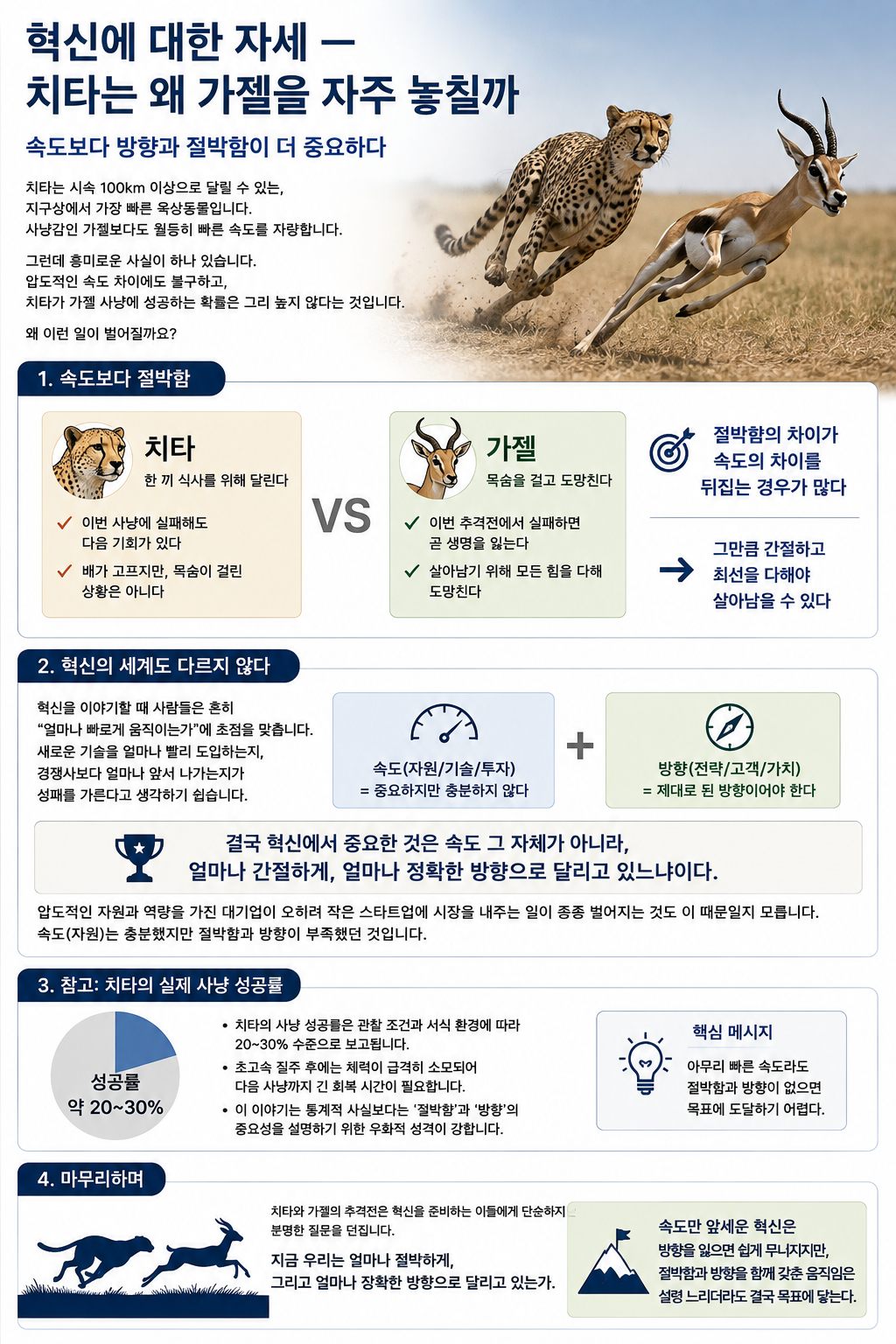
치타는 시속 100km 이상으로 달릴 수 있는, 지구상에서 가장 빠른 육상동물입니다. 사냥감인 가젤보다도 월등히 빠른 속도를 자랑합니다.
그런데 흥미로운 사실이 하나 있습니다. 압도적인 속도 차이에도 불구하고, 치타가 가젤 사냥에 성공하는 확률은 그리 높지 않다는 것입니다.
왜 이런 일이 벌어질까요?
속도보다 절박함
이유는 의외로 단순합니다. 치타는 한 끼 식사를 위해 달리지만, 가젤은 목숨을 걸고 도망치기 때문입니다.
같은 속도로 달리는 것처럼 보여도, 둘이 걸고 있는 것은 전혀 다릅니다. 치타에게 이번 사냥은 실패해도 다음 기회가 있는 일이지만, 가젤에게 이번 추격전은 실패하면 곧 생명을 잃는 일입니다. 그 절박함의 차이가 결국 속도의 차이를 뒤집는 경우가 많습니다.
즉, 그만큼 간절하고 최선을 다해야 살아남을 수 있다는 뜻입니다.
혁신의 세계도 다르지 않다
이 이야기가 혁신 강의에서 자주 인용되는 이유는, 혁신을 대하는 조직이나 개인의 모습과 정확히 겹치기 때문입니다.
혁신을 이야기할 때 사람들은 흔히 "얼마나 빠르게 움직이는가"에 초점을 맞춥니다. 새로운 기술을 얼마나 빨리 도입하는지, 경쟁사보다 얼마나 앞서 나가는지가 성패를 가른다고 생각하기 쉽습니다.
하지만 치타와 가젤의 이야기는 다른 관점을 제시합니다. 빨리 달리는 것도 중요하지만, 더 중요한 것은 제대로 된 방향으로 달리는 것이라는 점입니다. 아무리 빨라도 방향이 틀리면 목표에 닿지 못하고, 아무리 유리한 조건을 갖췄어도 절박함이 없으면 결정적인 순간에 힘을 내지 못합니다.
결국 혁신에서 중요한 것은 속도 그 자체가 아니라, 얼마나 간절하게, 얼마나 정확한 방향으로 달리고 있느냐입니다. 압도적인 자원과 역량을 가진 대기업이 오히려 작은 스타트업에 시장을 내주는 일이 종종 벌어지는 것도 이 때문일지 모릅니다. 속도(자원)는 충분했지만 절박함과 방향이 부족했던 것입니다.
다만 치타의 실제 사냥 성공률에 대해서는 관찰 조건과 서식 환경에 따라 다양한 수치가 보고되어 있으며, 이 이야기 역시 강연에서 절박함을 설명하기 위한 우화적 성격이 강합니다. 핵심은 통계적 사실 자체보다 "속도보다 방향과 절박함이 중요하다"는 메시지에 있습니다.
치타와 가젤의 추격전은 혁신을 준비하는 이들에게 단순하지만 분명한 질문을 던집니다. 지금 우리는 얼마나 절박하게, 그리고 얼마나 정확한 방향으로 달리고 있는가. 속도만 앞세운 혁신은 방향을 잃으면 쉽게 무너지지만, 절박함과 방향을 함께 갖춘 움직임은 설령 느리더라도 결국 목표에 닿습니다.
The Surprising Record of the Fastest Animal on Earth
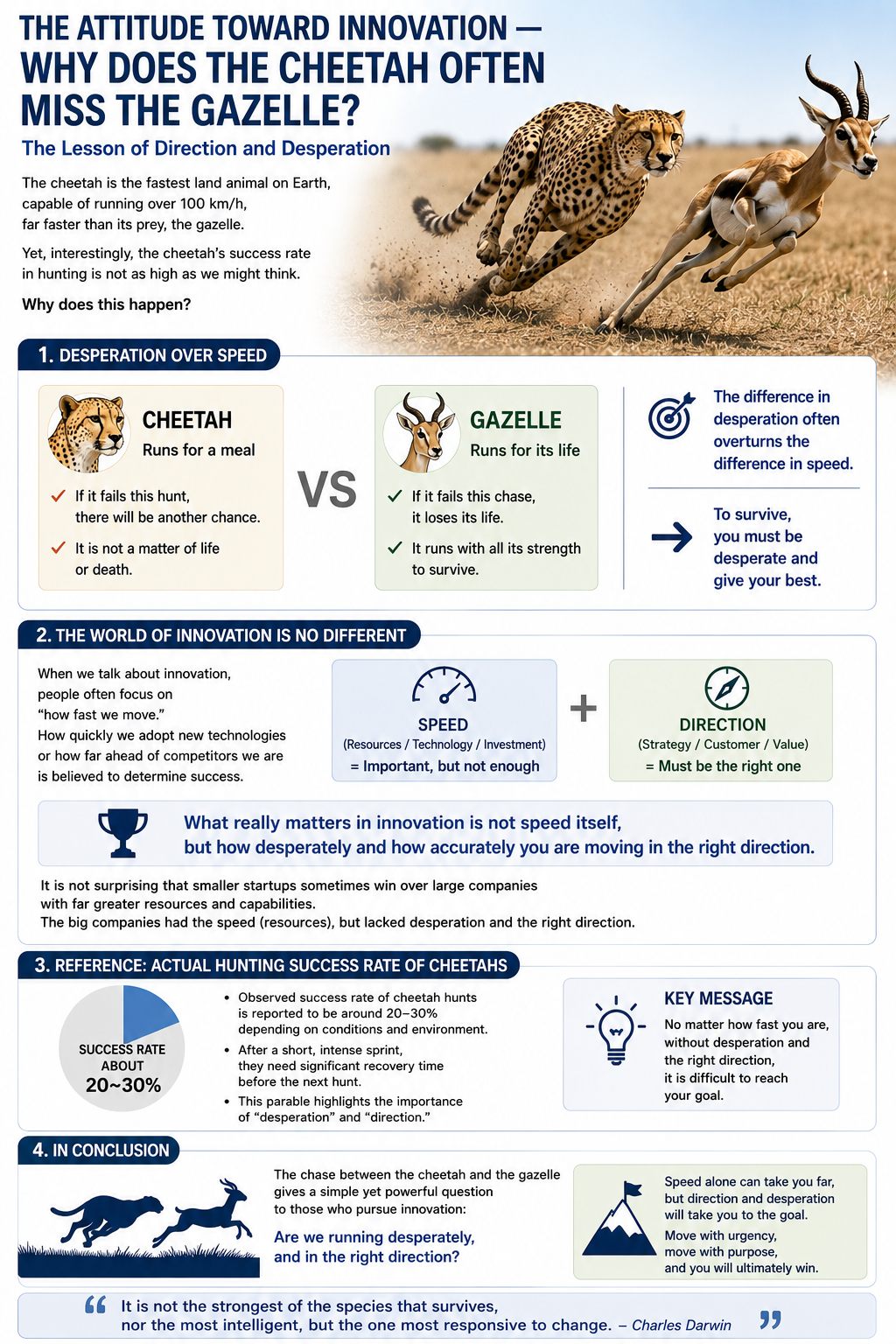
The cheetah can run at over 100 km/h — the fastest land animal on the planet. It is, by a wide margin, faster than its prey, the gazelle.
And yet here is the interesting part: despite that overwhelming speed advantage, the cheetah's success rate in hunting gazelles is not particularly high.
Why does this happen?
Desperation Beats Speed
The reason is surprisingly simple. The cheetah is running for a meal. The gazelle is running for its life.
They may look like they are running at similar speeds, but what each of them has at stake is completely different. For the cheetah, a failed hunt just means trying again later. For the gazelle, losing this chase means dying right now. That difference in desperation is often enough to close — and reverse — the gap in raw speed.
Put plainly: you have to want it badly enough, and give everything you have, to survive.
Innovation Is No Different
This story appears in innovation lectures precisely because it maps so directly onto how organizations and individuals approach change.
When people talk about innovation, the focus tends to fall on speed: how fast can you adopt new technology, how far ahead of competitors can you get. It is easy to assume that whoever moves fastest wins.
The cheetah and gazelle offer a different perspective. Speed matters — but running in the right direction matters more. No matter how fast you move, if you are pointed the wrong way, you never reach the goal. And no matter how strong your position, if the urgency is not there, you cannot find the extra effort when it counts.
What ultimately determines success in innovation is not speed itself, but how desperately and how accurately you are moving. This may explain why well-resourced incumbent companies so often cede markets to small startups: the resources (speed) were there, but the desperation and direction were not.
Note: actual cheetah hunt success rates vary considerably depending on observation conditions and habitat, and this story is more fable than field data. The point is not the statistic — it is the message that direction and desperation matter more than raw speed.
The cheetah's chase poses a simple but pointed question for anyone working on innovation: how desperately, and how accurately, are we running right now? Innovation driven by speed alone collapses the moment direction is lost. But movement that combines genuine urgency with a clear direction will reach its target — even if it is not the fastest thing in the field.
댓글Comments