[생산관리] 칸반(KANBAN) 시스템, 제대로 이해하기 — Waterville TG 사례로 보는 실전 활용[Production Management] Understanding Kanban: Real-World Application at Waterville TG
FREEWAYFREEWAY·2026년 8월 18일August 18, 2026·9분 읽기9 min read
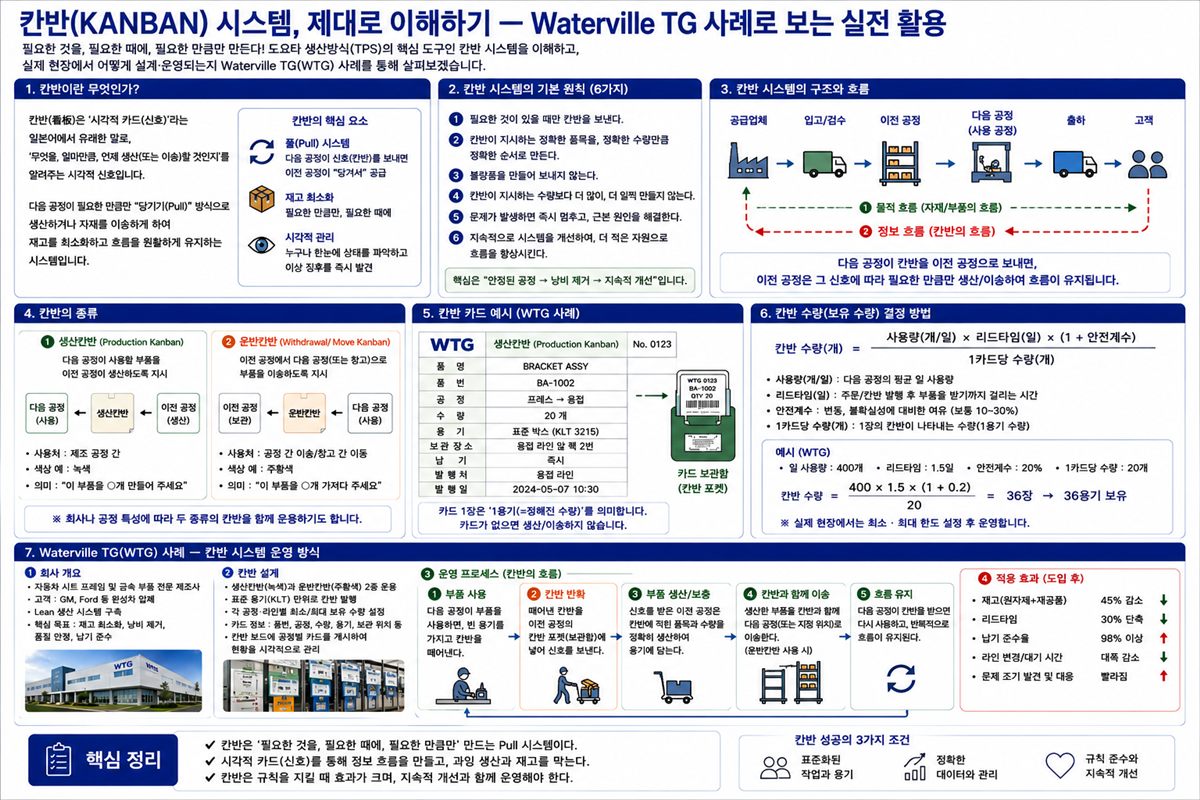
생산관리를 공부하다 보면 반드시 만나게 되는 개념이 있습니다. 바로 칸반(Kanban) 시스템입니다. 도요타 생산방식(TPS)의 핵심 도구로 잘 알려져 있지만, 막상 "칸반이 정확히 뭐냐"고 물으면 명확히 설명하기 어려운 경우가 많습니다.
이번 글에서는 칸반의 기본 개념과 운영 원칙을 정리하고, 실제 자동차 부품 제조사인 Waterville TG(WTG)의 사례를 통해 칸반이 현장에서 어떻게 설계되고 운영되는지 구체적으로 살펴보겠습니다.
1. 칸반 시스템이란?
칸반 시스템은 각 작업장에서 필요한 부품을 필요한 시점에 "끌어당기는(pull)" 방식으로 조달하기 위해 사용하는 정보 시스템, 흔히 말하는 카드 시스템입니다.
전통적인 생산 방식이 "만들어서 밀어내는(push)" 방식이라면, 칸반은 후공정이 필요로 할 때만 전공정이 부품을 공급하는 당김 방식(pull system)이라는 점이 핵심입니다.
칸반 시스템의 6가지 운영 규칙
칸반이 제대로 작동하려면 다음 원칙이 지켜져야 합니다.
모든 콘테이너(용기)는 반드시 카드를 하나씩 가지고 있어야 한다.
조립라인은 항상 가공 셀로부터 자재를 인출한다.
인출 카드의 요구 없이는 절대 저장영역에서 부품 콘테이너를 꺼내오지 않는다.
콘테이너에는 항상 동일한 수량의 양품(良品)만 담겨 있어야 한다.
결함 없는 부품만 흐르게 해야 자재와 작업자의 시간을 가장 효율적으로 쓸 수 있다.
총 생산수량은 시스템 내 생산주문카드가 허용한 수량을 넘을 수 없고, 인출된 부품 수량도 인출카드가 허용한 총수량을 초과할 수 없다.
이 규칙들의 공통점은 결국 "카드가 없으면 아무것도 움직이지 않는다"는 것입니다. 카드 자체가 생산과 이동을 통제하는 신호이자 규율인 셈입니다.
2. 복수카드(Two-Card) 시스템의 흐름
칸반이 실제로 작동하는 구조를 단순화하면 다음과 같은 흐름을 가집니다.
저장영역 → 생산주문점 → 가공 셀 → 카드수령점 → 콘테이너 경로 → 조립라인 → 수입저장
이 흐름 속에서 생산주문카드와 인출카드(이동카드)가 각각의 역할로 순환하며 자재와 정보를 함께 흘려보냅니다.
3. 칸반의 배경 — 카드의 종류
KANBAN은 일본어로 "Visual card(눈에 보이는 카드)"를 의미합니다. 컨테이너에 부착되어 보충(replenishment)의 시작을 통제하는 수단이며, JIT(Just In Time) 시스템에서 부품 흐름을 통제하는 대표적인 기법입니다.
정확한 시간에, 정확한 양을, 정확한 품목으로 생산하도록 만드는 pull replenishment logic system이라 할 수 있습니다. 시스템 내 카드 수를 줄일수록 문제를 확인하기 쉬워지고, 지속적 개선(continuous improvement)이 가능해진다는 점도 중요한 특징입니다.
Two-card system vs. Single-card system
구분
내용
Two-card system
Production card(생산칸반): 작업장에서 부품 제조를 허가 / Withdrawal card(이동칸반): 작업장 간 자재 이동을 허가 — 두 카드가 분리되어 운영
Single-card system
Production card와 Withdrawal card의 기능을 하나의 카드가 통합 수행
4. 실전 사례: Waterville TG Inc.의 칸반 운영
칸반에 관한 논문은 많지만, 정작 칸반 카드 자체의 내용(content)과 디자인(design)을 다룬 연구는 드뭅니다. 여기서는 Waterville TG(WTG)의 사례를 통해, 바코딩 기술과 포카요케(poka-yoke, 실수 방지) 기법을 접목한 칸반 설계가 실제로 어떤 성과를 만들어냈는지 살펴봅니다.
4-1. 회사 소개
업종: 차량용 웨더 스트립(weather strips) 제조 전문 기업
규모: 생산라인 385개, 직원 1,500명 이상
매출: 1998년 기준 약 CAN 2억 1천만 달러(약 미화 1억 5천만 달러)
모기업: 1988년부터 다국적 기업 Toyota Gosei가 소유 (차량용 고무·우레탄·플라스틱 제품 분야의 세계적 선도 기업)
WTG는 칸반의 내용과 디자인에 바코딩 기술과 컬러 코드를 결합해 생산 통제와 데이터베이스 정합성을 크게 향상시켰습니다. 칸반은 공정 단계별로 세 종류로 나뉩니다.
Raw Materials(원자재) 칸반
Work in Process(WIP, 재공품) 칸반
Finished Goods(완제품) 칸반
4-4. 원자재(Raw Materials) 칸반
원자재 칸반에는 다음 정보가 담깁니다.
부품번호(Part number)
설명(Description)
카드당 정해진 수량 = 칸반 용량(Predetermined quantity per card)
수령지역(Receiving area)
사용지점 저장소(Point-of-use storage)
칸반번호 — 시스템 내에서 카드를 식별하는 고유번호
바코드 — 칸반번호, 부품번호, 수량 정보를 포함
대체 계량 단위(Alternate unit of measure)
4-5. 재공품(Work in Process) 칸반
WIP 칸반은 원자재 칸반보다 관리 항목이 더 많습니다.
칸반유형(Kanban type: WIP)
일련번호 — 시스템 내에서 개별 WIP 카드를 식별
칸반번호 — 부품번호와 유사한 역할
부품번호(generic revision number 포함)
부품 설명
칸반당 수량
바코드(일련번호·부품번호·수량 포함)
생산작업장(Production work center)
저장장소(Stocking location)
Generic revision number — 부품번호 끝의 "x" 표기로, WIP와 엔지니어링 변경관리를 단순화하기 위한 WTG 자체 개선 요소
Family identifier(제품군 식별자)
특히 눈여겨볼 부분은 generic revision number입니다. 설계 변경이 잦은 부품이라도 칸반 자체를 매번 새로 만들 필요 없이 변경관리를 단순화할 수 있도록 고안된 장치로, WTG가 실무에서 자체적으로 개선한 포인트입니다.
4-6. ID Sheet와 공장 간 카드 이동
컨테이너에 부착되는 ID Sheet에는 WIP 칸반과 공통되는 정보(생산공정, 칸반번호, 부품번호, 설명, 생산작업장, family identifier) 외에 다음이 추가됩니다.
공급자 식별번호(Supplier's identification number)
컨테이너 형태(Type of container used)
컨테이너당 수량 — 전체 칸반 수량의 일부분
하청업체명
사출 길이(Length of extrusion)
Coaticook ↔ Waterville 공장 간 부품 교환에서는 Z card(withdrawal card)가 이동 신호로 사용됩니다. Coaticook 공장이 Waterville의 WIP 부품을 필요로 하면 Z card를 발행해 Waterville로 보내고, Waterville은 이를 받아 해당 컨테이너의 WIP 칸반을 대신하게 합니다. 이때 ID Sheet 위에 Z card가 놓이는 방식 자체가 포카요케(실수 방지) 장치로 작동합니다.
흥미로운 점은 이 카드 이동 메커니즘이 하청업체에는 적용되지 않는다는 것입니다. 하청업체는 대신 faxban(팩스를 이용한 요청)으로 WIP 부품을 요청합니다.
4-7. 완제품(Finished Goods) 칸반
WTG는 완제품 단계에서 두 가지 카드를 함께 사용합니다.
P card(생산칸반): production transaction 보고를 위한 스캐닝 후 제거
E card(shipping 칸반): production signal을 전달하며, 선적 시점까지 완제품과 함께 남아 있음
완제품이 선적지역에 도착하면 production card를 제거하고 스캔해 production transaction을 보고하며, 이 과정에서 완제품 재고 수준이 갱신됩니다. E/P 카드는 WIP 칸반과 유사한 배치 구조를 따릅니다.
5. 결론 — 칸반 설계가 만든 실제 성과
WTG는 원자재·WIP·완제품 각 단계에서 바코딩 기술과 컬러 코드를 활용해 칸반의 내용과 디자인을 최적화했고, 그 결과 다음과 같은 실질적 이익을 얻었습니다.
재고 정확도(inventory accuracy) 20% 향상
부품 발송 실수 50% 감소
엔지니어링 변경관리 관련 비용 80% 이상 절감
기존에는 순환하는 카드를 모두 수거해 오류를 파악하는 데 2~4일이 걸렸지만, 개선 이후 데이터베이스 업데이트에 단 몇 초만 소요
원자재 칸반 스캐닝 시점에 실제 수량 정보가 탐지되어, 자재명세서(BOM)의 부정확성 탐지율 향상
이러한 개선은 WTG가 JIT 도구와 SAP ERP 시스템 간의 원활한 인터페이스를 확보하기 위해 지속적으로 칸반 프로세스를 개선해온 노력의 결과였습니다.
칸반은 단순히 "카드를 쓰는 생산 방식" 정도로 이해되기 쉽지만, WTG 사례에서 볼 수 있듯 카드 한 장에 담기는 정보 설계가 재고 정확도, 오류율, 변경관리 비용까지 좌우합니다. 특히 바코드·컬러코드·포카요케를 결합한 접근은 지금의 MES·ERP 연동 관점에서 봐도 여전히 유효한 인사이트를 줍니다.
칸반 시스템 도입을 검토 중이라면, "카드를 어떻게 흘릴 것인가"보다 먼저 "카드에 어떤 정보를 어떻게 담을 것인가"부터 설계해 보는 것을 추천합니다.
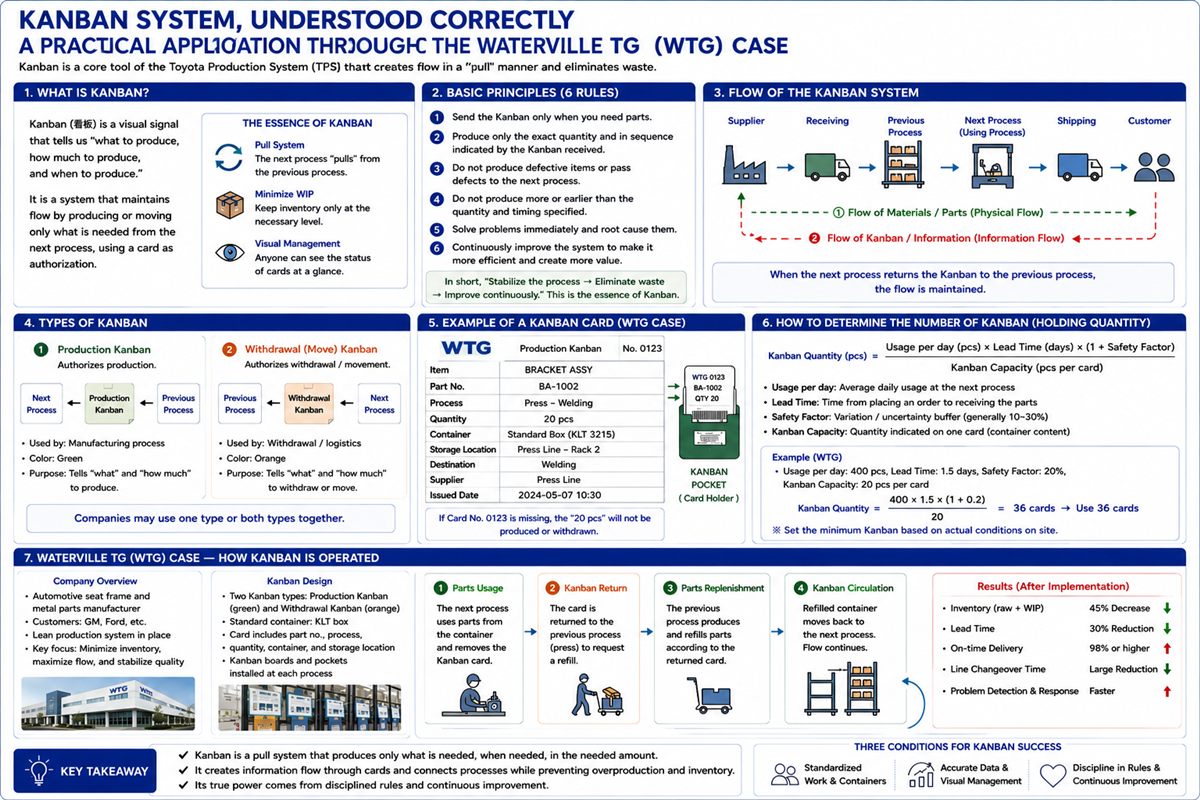
There is one concept you will inevitably encounter in production management: the Kanban system. It is widely known as a core tool of the Toyota Production System (TPS), yet when asked to explain precisely what kanban is, many practitioners struggle to give a clear answer.
This article covers the fundamentals and operating rules of kanban, then examines in concrete detail how it is designed and operated in practice through the case of Waterville TG (WTG), an automotive parts manufacturer.
1. What Is a Kanban System?
A kanban system is an information system — commonly called a card system — used to procure the parts each workstation needs, at the moment they are needed, by "pulling" them from upstream.
Traditional production systems push parts downstream whether or not downstream processes need them. Kanban is the opposite: a downstream process triggers replenishment only when it actually needs parts. This pull system logic is the defining characteristic.
The Six Operating Rules of Kanban
For kanban to function correctly, the following rules must be observed:
Every container must have exactly one card attached to it at all times.
The assembly line always withdraws materials from the fabrication cell.
A container of parts must never be removed from storage without a withdrawal card authorizing it.
Every container must hold exactly the same quantity of good parts — always.
Only defect-free parts may flow through the system; this is the most efficient use of materials and worker time.
Total production quantity cannot exceed what the production-order cards in the system authorize; total withdrawal quantity cannot exceed what the withdrawal cards authorize.
The common thread: "nothing moves without a card." The card itself is the signal and the discipline that governs production and movement.
2. How the Two-Card System Flows
Simplified, the kanban flow looks like this:
Storage area → Production-order point → Fabrication cell → Card-receipt point → Container route → Assembly line → Inbound storage
Through this loop, production-order cards and withdrawal (move) cards circulate in their respective roles, carrying both materials and information.
3. Background — Types of Kanban Cards
KANBAN is Japanese for "visual card." Attached to a container, it controls when replenishment begins. Within a JIT (Just In Time) system, kanban is the primary mechanism for controlling parts flow.
It can be described as a pull replenishment logic system — one that ensures production of the right item, in the right quantity, at the right time. An important property: the fewer cards in the system, the more visible problems become, enabling continuous improvement.
Two-Card vs. Single-Card System
Type
Description
Two-card system
Production card: authorizes manufacture of parts at a workstation / Withdrawal card: authorizes movement of materials between workstations — the two cards circulate separately
Single-card system
One card performs both the production-authorization and withdrawal-authorization functions
4. Case Study: Kanban Operations at Waterville TG Inc.
The literature on kanban is extensive, but research specifically addressing the content and design of the kanban card itself is rare. This section examines how WTG combined barcode technology with poka-yoke (mistake-proofing) to improve its kanban design — and what measurable gains resulted.
4-1. Company Background
Industry: Manufacturer of automotive weather strips
Scale: 385 production lines, over 1,500 employees
Revenue: Approximately CAN $210 million (approx. USD $150 million) as of 1998
Parent: Toyota Gosei, a multinational leader in rubber, urethane, and plastic automotive components, which acquired WTG in 1988
Locations: Headquarters and main plant in Waterville, Quebec, Canada; additional plant in Coaticook
Compounding: Synthetic rubber and other components are blended to produce a ribbon-form rubber compound
Extrusion: The compound is shaped, cured, and cut to length
Molding: Extruded parts are formed into their final shape
Secondary operations: Trimming, coating, and finishing — performed largely by subcontractors
4-3. Kanban Content and Design — Barcodes and Color Coding
WTG combined barcode technology and color coding in the content and design of its kanban cards, significantly improving production control and database integrity. Cards are divided into three types by process stage:
Raw Materials kanban
Work in Process (WIP) kanban
Finished Goods kanban
4-4. Raw Materials Kanban
Each raw materials card contains:
Part number
Description
Predetermined quantity per card (kanban capacity)
Receiving area
Point-of-use storage location
Kanban number — a unique identifier for the card within the system
Barcode — encodes kanban number, part number, and quantity
Alternate unit of measure
4-5. Work in Process (WIP) Kanban
WIP cards carry more information than raw materials cards:
Kanban type (WIP)
Serial number — identifies each individual WIP card within the system
Kanban number — functions similarly to a part number
Part number (including generic revision number)
Part description
Quantity per kanban
Barcode (encodes serial number, part number, and quantity)
Production work center
Stocking location
Generic revision number — denoted by "x" at the end of the part number, a WTG-developed improvement to simplify WIP and engineering change management
Family identifier
The generic revision number deserves particular attention. It allows engineering changes to be managed without reprinting kanban cards every time a part is revised — a self-developed simplification that WTG built into its own system.
4-6. ID Sheet and Inter-Plant Card Movement
The ID Sheet attached to each container carries the same core fields as the WIP kanban (production stage, kanban number, part number, description, production work center, family identifier), plus:
Supplier's identification number
Type of container used
Quantity per container (a subset of the total kanban quantity)
Subcontractor name
Length of extrusion
For parts exchanged between the Coaticook and Waterville plants, a Z card (withdrawal card) serves as the movement signal. When the Coaticook plant needs WIP parts from Waterville, it issues a Z card to Waterville; Waterville replaces the WIP kanban on the relevant container with the Z card. The physical act of placing the Z card on top of the ID Sheet acts as a built-in poka-yoke (mistake-proofing) mechanism.
Notably, this card movement mechanism does not extend to subcontractors. Subcontractors instead request WIP parts via faxban — a fax-based replenishment request.
4-7. Finished Goods Kanban
At the finished goods stage, WTG uses two cards together:
P card (production kanban): scanned and removed when a production transaction is reported
E card (shipping kanban): carries the production signal and travels with the finished goods until shipment
When finished goods arrive in the shipping area, the production card is removed and scanned to record the production transaction, which simultaneously updates finished goods inventory levels. The E/P card structure follows a similar layout to the WIP kanban.
5. Results — What Better Card Design Actually Achieved
By combining barcodes and color coding across raw material, WIP, and finished goods cards, WTG achieved the following measurable gains:
20% improvement in inventory accuracy
50% reduction in part dispatch errors
Over 80% reduction in engineering change management costs
Previously, identifying errors required physically collecting all circulating cards — a process that took 2–4 days. After the improvement, database updates take seconds
Scanning raw material kanban cards at the point of receipt captures actual quantity data, improving detection of BOM (Bill of Materials) inaccuracies
These gains were the result of WTG's sustained effort to improve its kanban processes in pursuit of a seamless interface between JIT tools and its SAP ERP system.
Kanban is easy to dismiss as "a production system that uses cards." But the WTG case shows that the information design of the card itself — what goes on it and how — directly determines inventory accuracy, error rates, and change management costs. The barcode + color code + poka-yoke approach remains directly applicable to modern MES/ERP integration challenges.
If you are evaluating a kanban implementation, the right starting point is not "how do we circulate the cards" — it is "what information do we put on the card, and how do we structure it."
댓글Comments