[생산관리 실무 노하우] 프롤로그: 현장에서 배운 생산관리의 진짜 의미[Production Management Know-How] Prologue: What Production Management Really Means — Lessons from the Factory Floor
FREEWAYFREEWAY
·
2026년 7월 13일July 13, 2026
·
6분 읽기6 min read
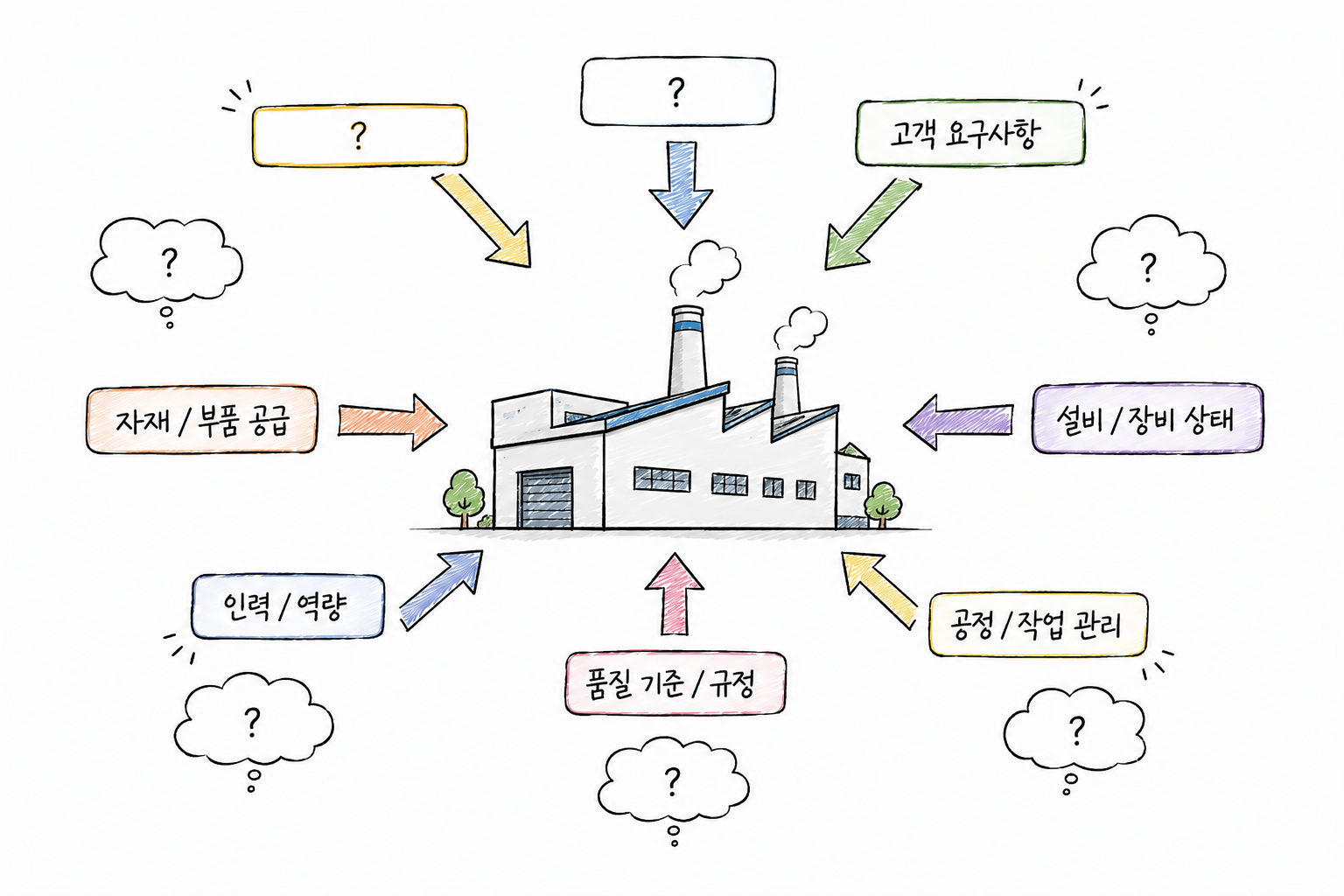
“생산관리란 무엇인가?” 단어 자체가 그 의미를 직관적으로 전달하지만, 실제 현장에서 맞닥뜨리는 생산관리는 눈이 어지러울 정도로 광범위합니다. 학술적인 정의나 이론적인 정답은 구글에 검색해 보면 이미 차고 넘치도록 잘 정리되어 있습니다.
따라서 저는 교과서에 나오는 거창한 이론이나 과한 설명은 생략하겠습니다. 그 대신, 오랜 세월 제조업 실무 최전선에서 온몸으로 부딪히며 깨달았던 문제들과, 이를 해결하기 위해 쌓아온 소소하지만 강력한 실전 팁을 나누고자 이 연재를 시작합니다.
저는 제조업, 특히 트렌드가 거세고 까다로운 ‘화장품 업계’에서 오랜 기간 근무했습니다. 비록 화장품이라는 특정 업종의 경험을 바탕으로 쓰는 글이지만, 근본적으로 “바닷물과 민물은 모두 물”이라는 관점에서 보면 대한민국의 모든 제조업 현장은 거의 동일한 메커니즘으로 돌아갑니다. 공장의 돌아가는 생리를 아시는 분들이라면 업종을 불문하고 누구나 깊이 공감하실 수 있을 것입니다.
앞으로 이어질 글에서는 이론이 아닌, 제가 직접 경험하고 깨졌던 단편적인 실무 에피소드와 현장 노하우를 가감 없이 공유하겠습니다.
참고로 필자는 화장품 업계에서 물류 담당, 포장 관리, 자재 관리, 수입 화장품 품질관리(QA), 제조관리, 그리고 총괄 생산관리(PM)까지 생산의 전 과정을 두루 거쳤습니다.
이 바닥에 정착하기 전에는 빙축열 엔지니어링 시스템 구축부터 웹디자인, 웹마스터, PC 수리, 그리고 김대중 대통령 시절 대한민국 전역에 초고속 인터넷 인프라 망을 깔던 IT 격동기의 주역이기도 했습니다. IMF 시절에는 생계를 위해 소위 말하는 현장 노가다와 석축 공사 현장까지 전전하며, 바닥부터 세상을 다지는 경험을 쌓았습니다.
이러한 이종(異種) 산업의 경험과 IT 지식은, 역설적으로 보수적인 제조업 생산관리 현장에서 데이터를 다루고 병목 현상을 해결하는 데 엄청난 무기가 되었습니다.
이 바닥의 진짜 핵심은 서류가 아니라 ‘현장’과 ‘데이터’의 매칭입니다. 다음 글에서는 잔말 말고 바로 핵심으로 직행하여, 제가 생산관리를 할 때 현장의 혼선을 제로로 만들었던 “실무 컴퓨터 문서(엑셀) 최적화 양식”의 비밀부터 알아보도록 하겠습니다.
"What is production management?" The phrase itself intuitively conveys its meaning, yet the production management you encounter on an actual factory floor is dizzying in its scope. Academic definitions and theoretical answers are already abundantly available with a simple Google search.
So I will skip the grand theories and elaborate explanations found in textbooks. Instead, I am starting this series to share the problems I ran into head-on over many years on the front lines of manufacturing — along with the small but powerful practical tips I built up to solve them.
I spent many years in manufacturing, specifically in the fiercely trend-driven and demanding cosmetics sector. Although these articles are grounded in experience from that particular industry, from the perspective that "seawater and freshwater are both still water," virtually every manufacturing floor in Korea operates on nearly the same mechanism. Anyone who knows how a factory ticks — regardless of industry — will find deep common ground here.
In the articles ahead, I will share, without sugarcoating, the fragmentary real-world episodes I lived through and the shop-floor know-how I gained firsthand — not theory.
For reference, within the cosmetics industry I have worked across the full span of production: logistics, packaging management, materials management, quality assurance (QA) for imported cosmetics, manufacturing management, and overall production management (PM).
Before settling into this field, I was also part of the turbulent early days of IT in Korea — building thermal storage engineering systems, doing web design and webmastering, repairing PCs, and laying the high-speed internet infrastructure across the country during the Kim Dae-jung administration. During the IMF financial crisis, I worked construction and stone masonry jobs to make ends meet, building the world from the ground up.
That cross-industry experience and IT knowledge paradoxically became a tremendous asset on the conservative manufacturing shop floor — for handling data and resolving bottlenecks.
The real heart of this field is not paperwork — it is matching the shop floor with data. In the next article, I will get straight to the point and reveal the secret behind the "optimized spreadsheet format" I used to reduce shop-floor confusion to zero in my production management work.
![[Production Management Know-How] Prologue: What Production Management Really Means — Lessons from the Factory Floor](/productplan/assets/uploads/prologue_en.png)
댓글Comments